Choosing winter work gloves means balancing dexterity and warmth without compromising safety or productivity. This guide for US workers and safety managers explains materials, standards, and design tradeoffs, plus a step-by-step buying framework to pick gloves that fit your job, weather, and protection needs. Learn how to layer, test fit, and prioritize ratings for the best cold-weather PPE.
Why balancing dexterity and warmth matters in cold weather work
Understanding the construction of your gloves is the only way to predict how they will perform on a job site. You cannot rely on thickness alone to determine warmth; marketing terms like “extreme warmth” are meaningless without technical specifications. A thick glove filled with cheap cotton batting will freeze you faster than a thin glove engineered with modern synthetics. We need to look at the specific materials and safety ratings that dictate performance.
Insulation Systems and Loft Dynamics
The battle between warmth and dexterity is fought primarily in the insulation layer. The goal is to trap body heat without creating so much bulk that you cannot feel a fastener. Loft refers to the thickness and fluffiness of the insulation. In a work setting, high loft usually kills dexterity, so material choice is critical.
Synthetic Insulation
Materials like Thinsulate and PrimaLoft are the standard for industrial winter gear because they handle moisture better than natural fibers. They rely on microfibers to trap air molecules. 3M specs indicate that Thinsulate provides roughly 1.5 times the warmth of down when equal thicknesses are compared. This allows manufacturers to use a 40g fill weight for high-dexterity mechanics gloves, or 100g to 200g for stationary work in extreme cold. PrimaLoft Gold is another top contender. Lab tests show it retains 95% of its loft and warmth even when wet. This is critical for delivery drivers or utility workers who deal with snow and slush.
Down, Wool, and Fleece
Natural down has an incredible warmth-to-weight ratio, but it fails in work environments. Down compresses under pressure; if you grab a shovel, you compress the feathers, reducing insulation capability by up to 30% at the pressure points. Furthermore, once down gets wet, it stays wet. Wool, particularly Merino, is excellent as a liner material because it wicks moisture away from the skin and stays warm when damp. Standard fleece is breathable and affordable but offers less wind resistance. Heat Holders use a proprietary HeatWeaver lining that traps more air than standard fleece, helping bridge the gap between comfort and performance.
Shell Materials and Durability
The outer shell protects the insulation and provides the grip. Your choice here depends on whether you need abrasion resistance or flexibility.
Leather Types
Goatskin is the premium choice for dexterity. It is naturally higher in lanolin than cowhide, making it softer and more water-resistant. Hestra specs show that goatskin is roughly four times more supple than cowhide while maintaining an EN 388 abrasion resistance level of A2. Cowhide is cheaper and tougher, often hitting ANSI abrasion level 3, but it is stiffer and better suited for heavy material handling. Split leather—the rougher underside of the hide—is heat-resistant but acts like a sponge in wet conditions unless heavily treated.
Synthetic Shells
Nylon and Cordura offer high strength with low weight. Cordura fabrics can achieve an ANSI A4 cut resistance rating while being 50% lighter than leather. These materials do not absorb water like leather does, resisting rot and drying faster. Many modern gloves use a hybrid approach, placing leather on the palm for grip and a softshell synthetic on the back of the hand for flexibility.
Waterproofing and Breathability
Water is the enemy of warmth. Once your insulation gets wet, your body heat is sucked away 25 times faster than in dry air. You must distinguish between waterproof and water-resistant.
Membrane Technology
True waterproofing requires a membrane like Gore-Tex or Hipora sandwiched between the shell and the liner. For a glove to be truly waterproof, the internal seams must be taped. Gore-Tex is the industry leader with a 20,000mm waterproof rating and high breathability, allowing sweat vapor to escape so hands don’t get clammy. Hipora is a common alternative found in gloves like the Showa Atlas, offering a 10,000mm rating which is sufficient for rain but less breathable. Simple DWR (Durable Water Repellent) sprays will shed light snow but fail if you handle wet materials.
Grip and Touchscreen Technology
Modern workflows require interaction with tablets and phones. Taking gloves off to sign a digital manifest is a safety risk.
Palm Coatings
Nitrile coatings are the industry standard for winter grip; they remain flexible in cold, resist oil, and are durable. Polyurethane (PU) coatings are thinner (around 0.3mm), allowing for maximum tactile sensitivity for electricians, but offer less thermal protection. Silicone patterns are often fused to the palm to increase friction; tests on Ironclad gloves show silicone can improve grip on ice by 30%.
Conductive Tech
Touchscreen compatibility is achieved through conductive yarns woven into the fingertips or a conductive coating. Woven yarns (often silver or copper), like those used in the REI Flash Power Wool Gloves, are more reliable. They last longer than dip coatings, which can wear off after a few weeks of handling abrasive materials.
Active Heating Systems
For extreme cold or stationary tasks, passive insulation may not be enough. Heated gloves use battery power to generate heat. Most industrial models use 7.4V lithium-ion batteries, which provide more consistent heat than older 5V USB models. These systems can pump out 5 to 10 watts of heat, with runtimes of 6 to 8 hours on medium settings. Safety is a priority; look for UL-certified batteries with short-circuit protection. Gerbing and other manufacturers have integrated safety shut-offs to prevent overheating.
Understanding Safety Standards
You need to know how to read the label to ensure compliance. In the US, we look at ANSI/ISEA standards, but European EN standards are also common on spec sheets.
ANSI/ISEA 105-2024 & EN 388
ANSI 105 covers mechanical risks. Cut resistance is rated from A1 to A9. For general construction, aim for A3 or higher; handling sheet metal or glass requires A5. Puncture resistance is rated 1 to 5. EN 388 is the European equivalent, rating abrasion, cut, tear, and puncture. A glove might be warm, but if it has a low abrasion rating, rough concrete blocks will shred it quickly.
EN 511: Cold Protection
This is the specific standard for winter gloves, displayed as a shield icon with three numbers:
1. Convective Cold (1-4): Insulation against cold wind.
2. Contact Cold (1-4): Protection when holding a cold object.
3. Water Penetration (0 or 1): 0 means it leaks, 1 means it is waterproof.
For sub-zero work, you want a rating of at least 2 for convective and contact cold.
Electrical Ratings
Thermal gloves are rarely rated for electrical shock protection. NFPA 70E requires separate rubber insulating gloves for voltage protection. Unless a glove is stamped with an ASTM D120 rating and class, it offers zero shock protection. You can wear thermal liners underneath rubber voltage gloves, provided they do not interfere with the fit.
Comparison of Insulation Materials
| Material | Warmth (R-Value/inch) | Wet Performance | Compression Resistance | Best Use Case |
|---|---|---|---|---|
| Thinsulate (Synthetic) | 1.2 | Retains 90% warmth | High | General construction, mechanics |
| PrimaLoft Gold | 1.5 | Retains 95% warmth | High | Wet/slushy conditions, delivery |
| Down (800 Fill) | 2.2 | Retains 0-10% warmth | Low (fails under pressure) | Stationary supervision, dry cold |
| Wool / Fleece | 1.0 | Retains 60% warmth | Medium | Liners, high-activity tasks |
When reviewing a spec sheet, check the fill weight (40g for dexterity, 200g for extreme cold), verify the membrane type for wet conditions, and ensure the ANSI cut rating matches your specific hazards.
How to choose, fit, layer and maintain winter work gloves for your job
Knowing the difference between Thinsulate and PrimaLoft is useful, but it does not tell you which glove fits your specific workday. You need a systematic approach to selection that prioritizes the task first and the weather second. If a glove is warm but prevents you from doing your job, you will take it off. That is when injuries happen.
Step 1: Assess the Task and Hazards
Before looking at temperature ratings, define the physical work. You should answer these questions to filter your options.
Precision Requirements
Do you handle objects smaller than a quarter inch? If yes, you need high dexterity (ANSI Level 4 or 5). Heavy insulation will make this impossible. You will likely need a layering system with a thin, high-gauge liner.
Cut and Impact Risks
Are you handling sheet metal, glass, or rough lumber? Winter gloves often hide their protective ratings. Ensure the thermal shell has at least an ANSI A3 cut rating. If you work with heavy tools or in demolition, look for TPR (Thermoplastic Rubber) backing for impact protection.
Moisture Exposure
Is the job wet or dry? Snow removal is different from handling cold, oily pipes. If you work with liquids, a simple DWR (Durable Water Repellent) coating is not enough. You need a full waterproof membrane.
Step 2: Map Temperature to Glove Type
Match your environment to the right category. Overheating causes sweating, which eventually freezes your hands.
Mild Cold (32°F to 50°F)
You do not need heavy insulation here. A coated knit glove or a shell with a fleece liner works best. The goal is wind resistance and grip.
Wet Cold (20°F to 40°F)
This is the most dangerous range for frostbite because water conducts heat away from the body 25 times faster than air. Prioritize waterproof membranes like Gore-Tex or Hipora over thick insulation.
Extreme Cold (Below 20°F)
Dexterity naturally drops here. You need high-loft insulation (100g+). For stationary work, mittens or trigger-finger mitts are the only way to retain heat effectively.
Step 3: Layering Systems and Trade Pairings
A single pair of gloves rarely works for an entire shift. A modular approach allows you to adjust.
The Liner Strategy
Start with a thin merino wool or synthetic liner. This wicks sweat away from the skin. If you need to remove your outer glove to sign a form or check a sensor, the liner protects skin from flash freezing.
Trade-Specific Recommendations
| Trade | Recommended System | Why It Works |
|---|---|---|
| Electricians | Thin merino liner + Dexterity shell (e.g., Ironclad Cold Condition) | Maintains feel for wire nuts; liner prevents direct skin exposure. Note: These are not voltage rated. |
| Construction Laborers | Waterproof insulated shell (e.g., Carhartt Waterproof FastDry) | Durability against abrasion and moisture is the priority over fine motor control. |
| HVAC Technicians | Touchscreen compatible liner + Convertible mitt | Allows use of diagnostic tablets without exposing skin; mitt flips over for warmth between tasks. |
| Delivery Drivers | High-grip palm + Windproof shell | Needs to grip cardboard boxes without slipping; frequent in-and-out of vehicle requires breathability. |
Step 4: Sizing and Fit Procedure
Most workers buy winter gloves that are too tight. This restricts blood flow and compresses the insulation, making the glove colder.
Measure Correctly
Measure the circumference of your dominant hand just below the knuckles. Do not include the thumb. If you measure 9 inches, you are typically a Large.
Account for Liners
If you plan to wear a liner, go up one half to one full size. You need a small layer of warm air between the liner and the shell.
The Pinch Test
Put the glove on. Pinch the fabric at the tip of your middle finger. You should have about a quarter-inch (0.25″) of loose fabric. If your finger hits the end when your hand is open, the glove is too small. When you make a fist, that fabric will pull tight and freeze your fingertips.
Step 5: Buying Evaluation Checklist
Use this list when evaluating a sample pair before outfitting a crew.
Cuff Style
Gauntlet cuffs go over a jacket sleeve to keep snow out. Knit wrists go under the sleeve to keep heat in. Choose gauntlets for outdoor snow work and knit wrists for general construction.
Grip Performance
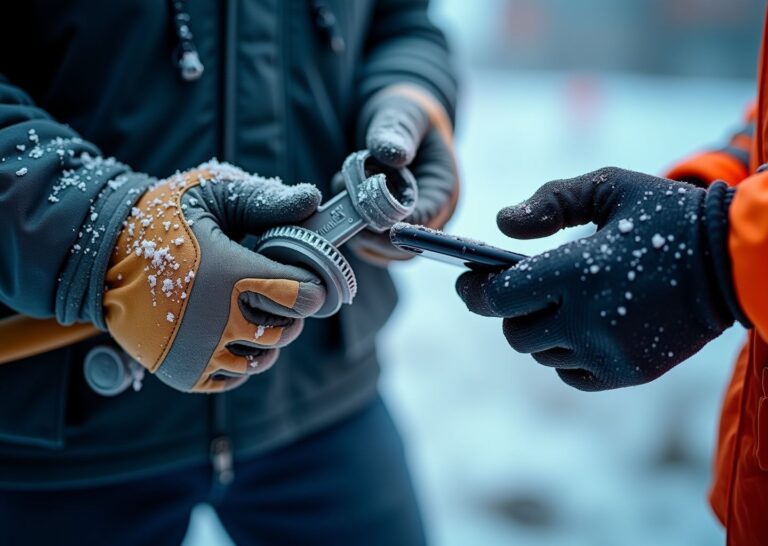
Test the grip on the actual materials you handle (wet pipe, oily wrench, cardboard). Cold stiffens coating materials, making them slick. Look for sandy nitrile or silicone patterns.
Touchscreen Reality
Do not trust the tag. Test the glove on your specific device. Thicker insulation often blocks the conductive signal even if the thread is conductive.
Step 6: Care and Maintenance
Winter gloves are expensive PPE. Proper care extends their life significantly.
Washing
Wash synthetic gloves in cold water (below 85°F). Hot water can delaminate waterproof membranes. Use mild detergent. Never use bleach or fabric softener, as these clog the breathable pores.
Drying
Air dry only. Never put insulated gloves in a dryer or on a radiator. High heat damages the synthetic fibers and ruins the loft. Turn them inside out if possible to dry the sweat.
Battery Care
For heated gloves, unplug the battery immediately after use. Charge them to about 50% before storing them for the summer. Leaving them fully drained for months can kill the lithium-ion cells.
Step 7: Budgeting and Procurement
Quality winter gloves cost between $30 and $80. While this is higher than standard PPE, the cost of frostbite or a dropped tool is much higher.
Lifespan Expectations
Expect a daily-use winter work glove to last 3 to 4 months. The insulation packs down over time, losing thermal value. If the outer shell is intact but the glove feels cold, the insulation is dead. Retire it.
Sample Procurement Spec
If you are ordering for a team, use these specifications to ensure quality:
Item: Winter Work Glove, Heavy Duty
Standard: ANSI/ISEA 105-2024 (Cut A3 minimum)
Thermal Rating: EN 511 Level 2 (Cold) or equivalent
Insulation: 100g synthetic (Thinsulate/PrimaLoft)
Waterproofing: Full membrane insert (not just spray coating)
Sizing: S-2XL (Must allow for liner clearance)
Cuff: Gauntlet style with pull tab
Grip: Sandy Nitrile or Silicone grip pattern
Frequently Asked Questions
Winter glove selection often gets complicated because you are fighting two enemies at once: the cold trying to numb your hands and job site hazards trying to injure them. Here are answers to the most frequent questions regarding winter hand protection.
Are heated gloves safe for construction sites?
Yes, but you need to manage the batteries correctly. Modern heated gloves usually run on 7.4V lithium-ion batteries which are generally safe for standard tasks. However, if you work in environments with flammable gases or high voltage risks, standard heated gloves are likely not compliant unless rated as intrinsically safe. The biggest issue is battery life; cold drains batteries fast, so keep a spare set in a warm pocket. Top Rated Winter Gloves lists several battery-operated options that have passed safety checks.
How do I size gloves if I plan to wear a liner?
You must size up. If you buy your normal size and stuff a liner inside, you will compress the insulation and restrict blood flow, making your hands colder. If you measure as a Large (9-10 inches), buy an Extra Large shell to accommodate the liner and leave about a quarter-inch of air space at the fingertips.
Do leather gloves keep hands warmer than synthetics?
Leather is warmer only if it stays dry. It has a natural structure that traps air well and blocks wind. However, once leather gets wet, it acts like a cold sponge and takes a long time to dry. For wet snow or slush, high-quality synthetics or treated leather with a waterproof membrane are better choices, as synthetics wick moisture away from the skin faster.
Can I get cut resistance and insulation without losing all dexterity?
Yes. Manufacturers now bond insulation like Thinsulate directly to cut-resistant shells (ANSI A3 to A5). Look for high-gauge shells (13-gauge or 15-gauge) which are thinner but strong. These provide protection from sharp edges while keeping the bulk low enough to handle tools.
How do I choose gloves for wet cold (33°F to 40°F)?
Wet cold is often more dangerous than dry freezing cold. You need a glove with a verified waterproof membrane, not just a water-resistant coating. Dipped gloves (fully coated nitrile or latex) are great for this temperature range because they are completely liquid-proof and offer great grip on wet tools.
Are touchscreen claims reliable and how do I test them?
Touchscreen claims are often unreliable. Conductive coatings wear off after a week of handling rough materials, whereas conductive yarns woven into the fabric last longer. The only way to know is to test them on your specific device with a screen protector installed, as thick glass protectors often block the signal.
When should I choose a waterproof membrane versus a DWR shell?
Choose a membrane (like Gore-Tex or Hipora) if your hands will be submerged or in contact with wet surfaces for long periods. Choose DWR (Durable Water Repellent) if you only need protection from light snow or occasional splashes. DWR breathes better, so your hands sweat less during hard labor, but it will eventually soak through in heavy rain.
How often should winter PPE gloves be replaced?
For daily heavy construction use, expect to replace them every 3 to 4 months. Moisture breaks down internal materials. Replace them immediately if the insulation feels “packed out” or thin, or if the waterproof lining is compromised.
Are ANSI and EN ratings required for purchases in the US?
OSHA requires employers to assess hazards and provide appropriate PPE, but they do not explicitly mandate ANSI ratings for every glove. However, ANSI ratings are the industry standard for proving due diligence. Always look for the ANSI/ISEA shield for cut/abrasion and EN 511 for cold ratings. Best Work Gloves for Winter explains how thermal technology interacts with these standards.
How should I store gloves between shifts?
Never leave your gloves in the work truck overnight. Freezing temperatures damage rubber coatings and degrade battery performance. Store them in a dry place between 50°F and 70°F. If they are wet, stand them up so air can circulate inside; do not use high-heat radiators as this can melt fibers and harden leather.
Final conclusions and actionable takeaways
Finding the right balance between keeping hands warm and maintaining the ability to work isn’t just about comfort; it is a safety calculation. You cannot force a single pair of gloves to do every job on a site. If you try, you usually end up with workers taking their gloves off to handle a screw, defeating the purpose of PPE.
The central tradeoff remains constant: Thicker insulation creates distance between your fingers and the tool, reducing tactile feedback. However, thin gloves that allow for precision work will not protect against frostbite if the temperature drops below zero. The solution lies in a structured decision framework.
The Decision Framework
You should approach glove selection with the same rigor used for selecting fall protection. It starts with the task, not the weather.
Assess the Task Precision
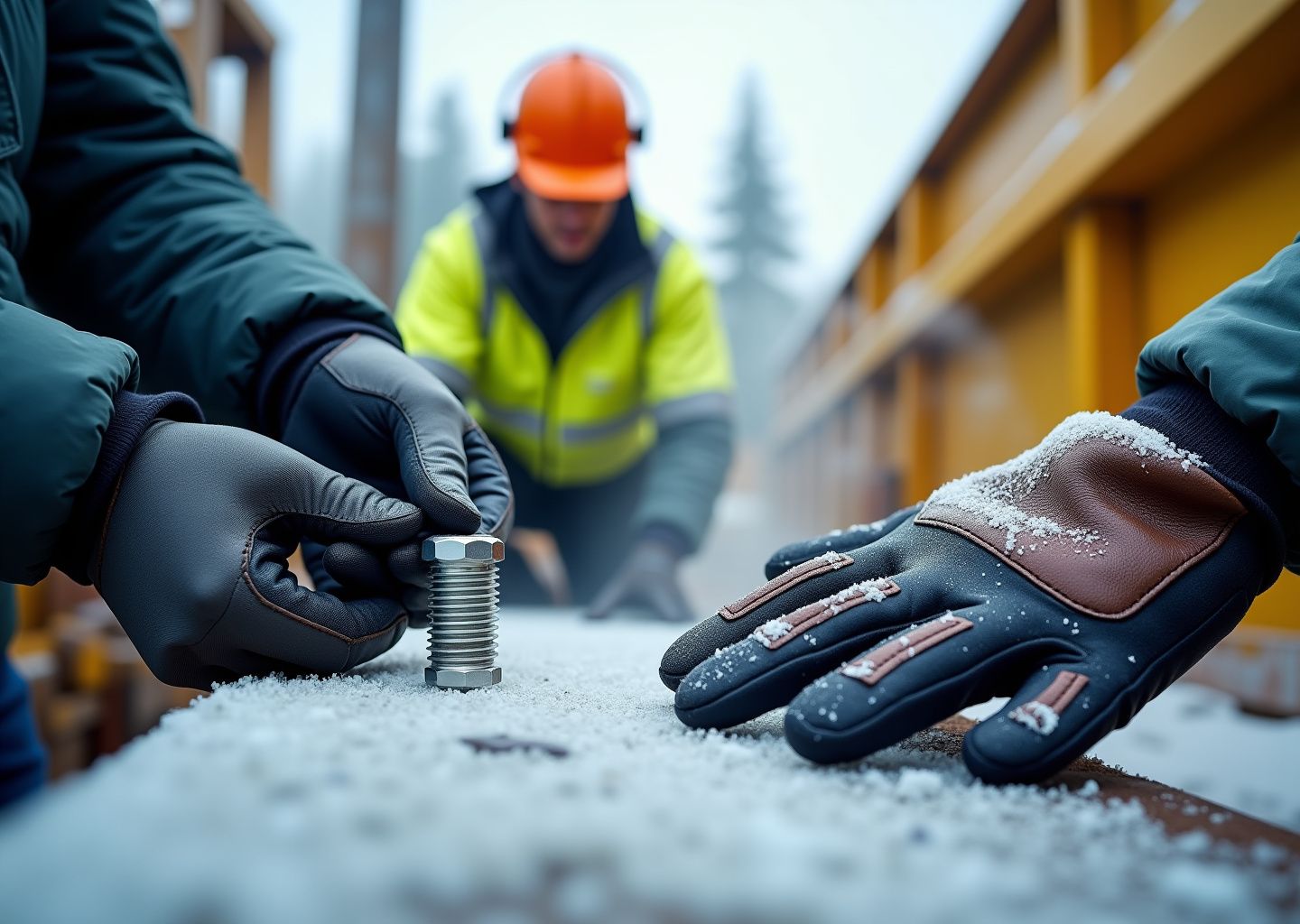
If the job involves handling fasteners smaller than 1/4 inch or manipulating touchscreens, dexterity is the primary requirement. A 2019 NIOSH field report noted that utilities workers handling small parts saw a 40% drop in speed when using bulky gloves. In these cases, use high-dexterity gloves (EN 388 Level 4 or 5) and rely on liners or hand warmers during breaks.
Map the Temperature and Wetness
Thermometers don’t tell the whole story; you must account for wind chill and moisture. Wet insulation loses heat rapidly. If the job involves wet materials or snow, a waterproof membrane is non-negotiable. For dry cold, a breathable leather or synthetic shell might be warmer because it prevents sweat buildup. Remember that skin temperature needs to stay above 59°F to maintain full dexterity.
Check the Safety Ratings
Never buy based on marketing terms. Look for the EN 511 codes printed on the glove for Convective and Contact Cold. For construction environments, verify the ANSI cut level. You can find insulated gloves that still offer A4 or A5 cut resistance, so there is no need to sacrifice mechanical protection for warmth.
When to Prioritize Warmth
There are specific scenarios where dexterity must take a backseat to thermal retention. If a worker is stationary—such as flagging crews or equipment operators—their body generates less heat.
Frostbite Risk Management
According to NIOSH standards, frostbite can occur in less than 30 minutes at -10°F with wind chill. In these conditions, a mitten or a heavy gauntlet style is the only safe option. The loss of finger separation allows fingers to share heat. Productivity might drop for fine motor tasks, but safety from cold stress takes precedence.
High-Moisture Environments
If hands get wet in freezing temperatures, heat loss accelerates. For tasks involving wet concrete or outdoor plumbing repair, waterproof barriers are critical. In these cases, prioritizing a double-dipped nitrile coating or a high-grade membrane is necessary, even if the glove feels stiffer.
When to Prioritize Dexterity
For electricians, mechanics, and finish carpenters, a bulky glove is a hazard. If you cannot feel the wire or the trigger, you risk accidents that are immediate.
Precision Handling
If the task requires feeling a ridge on a bolt or separating thin wires, look for 60g to 100g insulation weights like Thinsulate. Layering is often the best strategy here: a thin merino wool liner under a cut-resistant shell allows the worker to strip off the outer layer for ten seconds of precision work without exposing bare skin.
Tool Control
Thick palms cause grip fatigue because the worker has to squeeze harder to hold the tool. For these roles, look for pre-curved fingers and palm materials with high friction coefficients, such as silicone patterns.
Advice for Safety Managers
If you are responsible for buying PPE for a crew, avoid the “one box fits all” mistake.
Field Testing is Mandatory
Before placing a bulk order, buy small batches of three different glove models. Give them to your crew leaders and ask for feedback after one week. Ask specifically about hand fatigue and sweat. If a glove is too warm, workers sweat, the sweat freezes, and hands get cold.
Budget for Replacement
Winter gloves wear out faster than summer gloves. Plan your budget to replace gloves at least once during the winter season, or sooner for crews handling abrasive materials like masonry.
Quick Selection Checklist
If you need to make a purchase decision today, use this three-point check:
- Define the Primary Hazard: Is the main risk frostbite (stationary work) or dropped tools (precision work)? If precision, buy a high-dexterity shell with a separate liner. If frostbite, buy a heavy insulated gauntlet or mitt.
- Verify the Water Factor: Will the worker touch wet surfaces? If yes, look for “waterproof” with a membrane (like Gore-Tex or Hipora). If the work is dry, choose breathable leather or softshell.
- Confirm the Ratings: Check the label for EN 511 (Cold) and ANSI 105 (Cut). Ensure the cut level matches your site’s safety requirements (usually A3 or higher for general construction).
For a look at how specific models hold up to these standards in real-world testing, you can check independent reviews like the Best Winter Gloves Tested & Rated. The right glove is out there, but it requires matching the specs to your specific reality on the ground. Stay warm and work safe.
Sources
- 10 Best Winter Gloves of 2026, Tested for Cold Weather | CleverHiker — The REI Flash Power Wool Gloves are a standout option for anyone who values breathability, dexterity, and comfort during fast-paced adventures.
- 10 Best Winter Gloves of 2025/26 (Tested & Reviewed) — We chose the Outdoor Research Alti II Mitts as the Best Gloves for Extreme Cold because, well, they're just warm. (Not to mention their …
- Best Work Gloves for Winter: Durable Warmth That Keeps You Moving — Among the top contenders for the best winter work gloves are those from Heat Holders®. Known for their pioneering thermal technology, Heat …
- Gear Up: Best Winter Work Gloves for 2025 – Overlook Boots — Engineered for cold climates, these warm gloves offer exceptional dexterity and unparalleled warmth. With a waterproof design boasting …
- Top 5 Best Winter Work Gloves in 2025 – YouTube — Here The List Of Best Winter Work Gloves You Can Buy Now. ✓ Today's deals:- ▻ https://amzn.to/4dpkz1x ✓5. VGO Winter Mechanic Gloves …
- Top Rated Winter Gloves of 2025 at Tractor Supply Co. — Top Rated Winter Gloves of 2025 · 1. Carhartt Men's Waterproof FastDry Insulated Polyester Work Gloves, 1-Pair Love these · 2. Gerbing Men's Polyester 7V Battery …
- The Best Winter Gloves | Tested & Rated – Outdoor Gear Lab — To find the best winter gloves, we tested 16 top models for men and women from top brands and budget manufacturers to confirm which deliver …
EMPTY