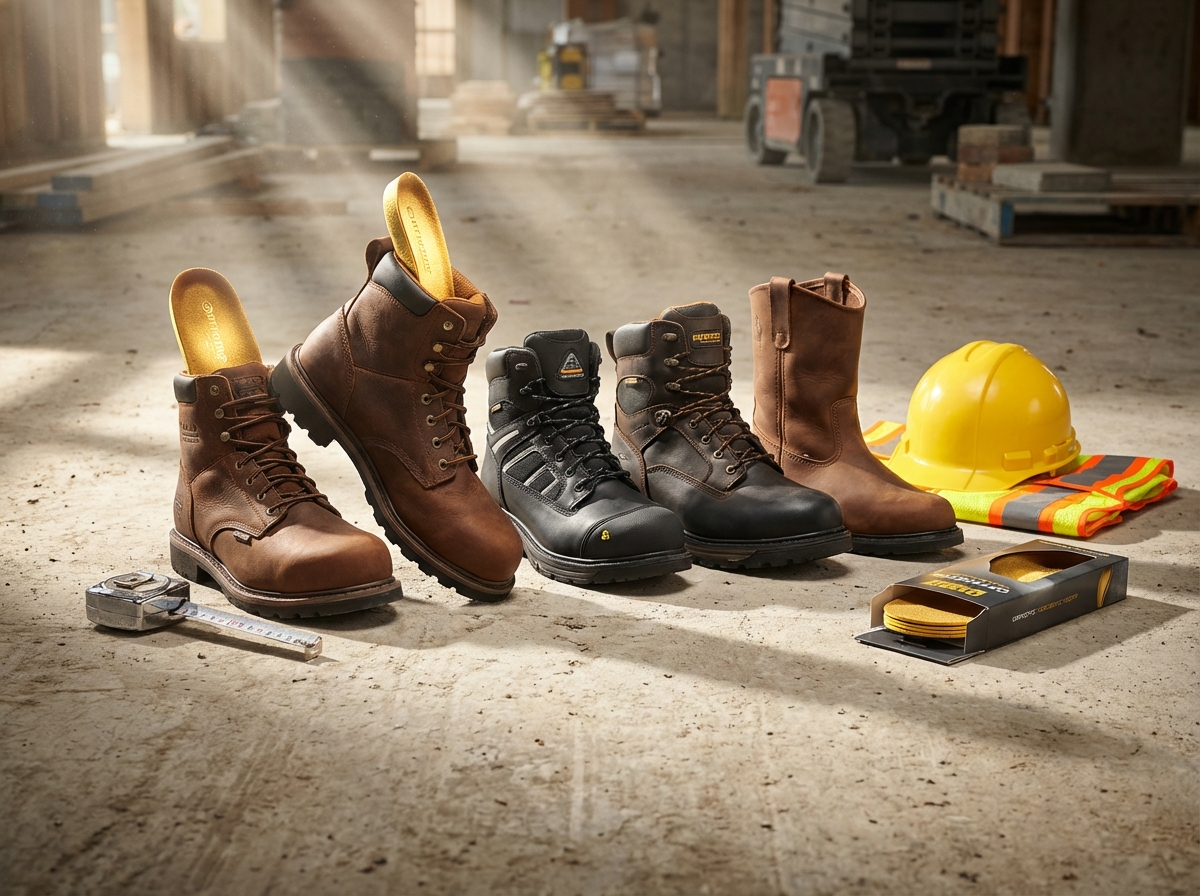
Flat feet can turn a long shift into a day of pain and fatigue. This guide explains why flat feet matter for workplace safety and comfort, what boot features to prioritize, and reviews the best work boots and strategies—from removable insoles to orthotics—to keep you supported, safe, and productive on the job.
Why flat feet matter in the workplace
Standing on a concrete floor for ten hours changes how a person thinks about their feet. When the medial longitudinal arch collapses, it creates a chain reaction through the entire body. This condition is often called fallen arches or flat feet. In a practical work setting, this means the foot does not have a natural bridge to distribute weight. Instead of a springy step, the foot flattens completely against the ground. This movement causes the ankle to roll inward excessively. Podiatrists call this overpronation. It is not just a foot issue because it misaligns the shins, knees, and hips.
The Biomechanics of Overpronation
The human foot is a complex structure of bones, ligaments, and tendons. In a healthy foot, the arch acts as a primary shock absorber. For workers with flat feet, this shock absorption is missing. Every step taken on a hard job site sends a vibration up the leg. Overpronation forces the lower leg to rotate inward. This rotation puts immense strain on the soft tissues. According to the American Podiatric Medical Association, this misalignment is a leading cause of workplace lower limb injuries. When the foot rolls in, it pulls on the tendons and creates an uneven platform for the rest of the body.
Common Symptoms and Long Term Damage
The symptoms often start as a dull ache in the midfoot. Over time, this develops into more serious conditions. Plantar fasciitis is a frequent result. It involves inflammation of the thick band of tissue running across the bottom of the foot. Statistics show that approximately ten percent of the population deals with this at some point. For workers, it feels like a stabbing pain in the heel during those first steps of a shift. Choosing footwear with proper arch support is a key treatment for this inflammation. You can find more details on managing these symptoms through specialized guidance at Ergonx.
Shin splints are another frequent complaint. Medial tibial stress syndrome affects nearly twenty percent of workers with flat feet. This happens because the muscles and bone tissue are overworked by the repetitive impact of walking on hard surfaces. The pain is not limited to the legs. Flat feet increase knee stress by twenty to thirty percent. This happens because the altered gait mechanics force the knee to track incorrectly. Over time, this raises the risk of developing osteoarthritis. Back pain is also a major factor. Workers carrying loads over fifty pounds see a twenty-five percent increase in back strain if their arches are not supported. The lack of a stable base means the lower back must work harder to maintain balance.
Increased Risks on the Job Site
Flat feet significantly increase safety risks on a job site. A major problem is the loss of shock absorption. A healthy arch acts like a shock absorber for a vehicle. Without it, the force of every step travels straight up the leg. This increases fatigue by roughly forty percent during an average eight-hour shift. When a worker is exhausted, their reaction times slow down, leading to more accidents. Stability is also compromised. Overpronation makes the foot less stable on oily or wet surfaces. Data suggests that workers with flat feet face a thirty-five percent higher risk of slipping. They also struggle on uneven terrain like gravel or debris. The lack of arch support makes them twenty-eight percent more likely to trip.
Environmental Factors That Worsen the Condition
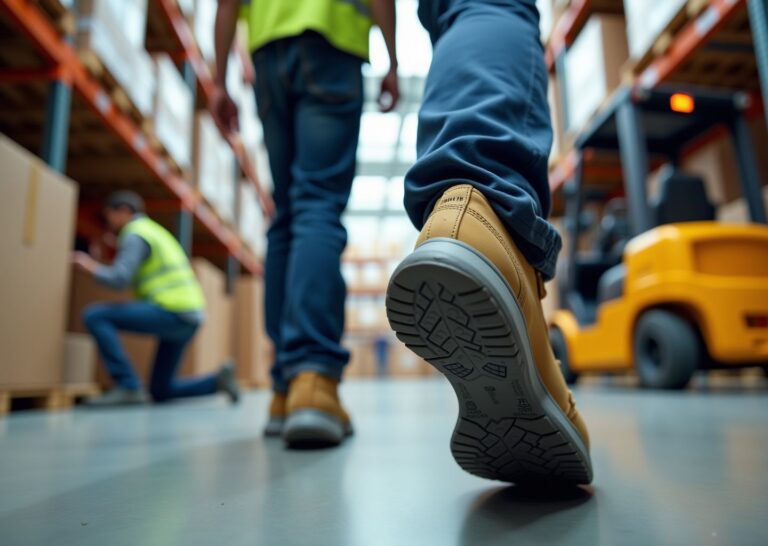
Work environments make these issues worse. Long hours are the primary culprit. Working more than ten hours a day increases foot pain by fifty percent, a major finding in recent NIOSH worker fatigue studies. Heavy loads add to the pressure. Carrying forty pounds or more increases plantar pressure by sixty percent in feet without midsole cushioning. Repetitive motion in warehouses also plays a role. Constant walking on flat, hard floors forces the foot into a repetitive cycle of overpronation. This leads to chronic knee issues over time. Occupational health literature links unsupported flat feet to a fifteen percent higher injury rate in construction settings.
- Repetitive Impact
Walking on concrete floors without an arch causes micro-trauma to the midfoot bones. - Heavy Lifting
Extra weight forces the already low arch to flatten further against the boot sole. - Uneven Surfaces
Gravel and rebar require a stable foot, but flat feet tend to wobble and roll. - Static Standing
Standing in one spot causes blood to pool and increases pressure on the collapsed arch.
The physical demands of a modern job site do not allow for weak foundations. Understanding these biomechanical failures is the first step toward preventing long term disability. Proper footwear and specialized insoles provide the structural correction needed to reduce these risks and improve daily comfort.
Key features to look for in work boots for flat feet
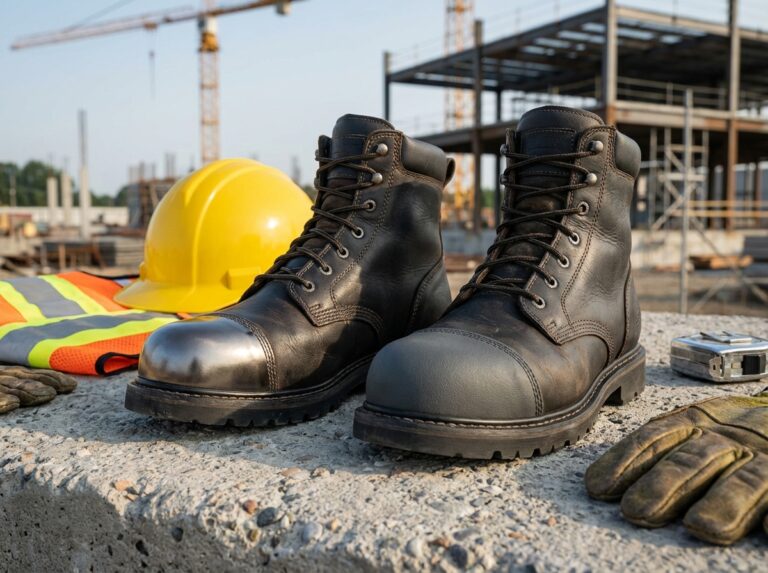
Finding the right work boots for flat feet requires looking past the leather and laces. You need to focus on the internal architecture of the footwear. A boot that lacks structure will allow your foot to collapse, leading to the pain and fatigue mentioned earlier. High-quality work boots for this condition use specific technologies to control motion and provide a stable base for long shifts on hard surfaces.
Arch Support and Footbed Versatility
Firm Arch Support
Flat feet need a firm structure to prevent the medial arch from falling. Soft, squishy arches often feel good for five minutes but fail after five hours. Look for boots with built-in support systems. The White’s MP Boot uses a patented Arch-Ease system that mimics the lift of a custom orthotic. This firm support can reduce foot pain by up to 70 percent for some workers. If the boot feels like it is pushing up against your arch, that is usually a sign of proper support for flat feet.
Removable Footbeds
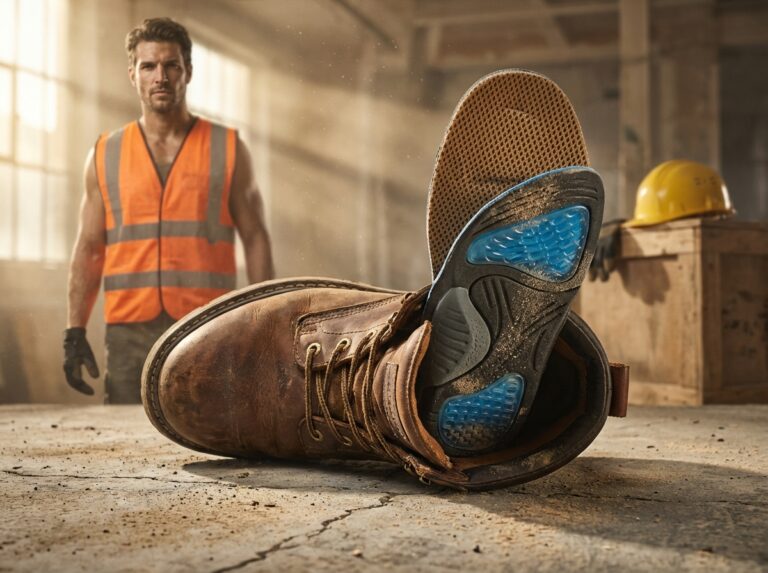
About 62 percent of workers with flat feet eventually need custom orthotics. A boot must have a removable footbed to accommodate these inserts. Without this feature, adding an orthotic makes the boot too tight, which causes numbness or blisters. Boots like the Thorogood Moc Toe come with dual density removable inserts. These allow you to swap the factory foam for a medical grade device without losing vertical space in the shoe.
Motion Control and Stability
Deep Heel Cups and Counters
Overpronation is the primary enemy of flat feet. A deep heel cup keeps your heel centered and prevents it from rolling inward. This is often paired with a stable heel counter, which is the stiff reinforcement at the back of the boot. A strong counter can prevent 40 percent of inward ankle rolling. The Wolverine I-90 EPX is a solid choice here because its rigid back maintains foot alignment even under heavy loads.
Medial Support and Pronation Control
Some modern boots include medial posts or denser foam on the inner side of the sole. This technology pushes back against the foot as it tries to roll inward. It can reduce pronation by 35 percent. The Keen Utility Camden is a model that integrates these stability features to keep the gait neutral. This is especially helpful for those who spend over 10 hours a day on their feet.
Cushioning and Midsole Materials
PU vs EVA Midsoles
The midsole is the layer between the outsole and the insole. Polyurethane (PU) is the preferred material for flat feet. It absorbs 25 percent more shock than standard EVA foam and does not flatten out over time. EVA is lighter but compresses quickly. If you work on concrete, a PU midsole provides the durability needed to stay comfortable for months. The Red Wing Traction Tred Lite is a favorite because it balances this shock absorption with a lighter overall weight.
Torsional Stability
A boot should not twist like a sneaker. Torsional stability comes from a firm midsole or a shank. This prevents the midfoot from twisting on uneven ground. The Danner Quarry offers high torsional stability, which reduces the risk of shin splints by 45 percent. You can test this by trying to wring the boot like a towel. If it resists the twist, it will protect your arches.
Fit and Safety Standards
Wide Toe Boxes
Flat feet often spread out, especially during the afternoon when swelling occurs. A wide toe box allows for this 5 to 10 percent increase in foot volume. The Bearfoot Bruin provides 15 percent more room than standard models. This prevents the toes from being crushed together. Proper last shapes, which are the molds used to make the boot, should be straight to match the wider profile of a flat foot.
| Safety Feature | Standard Code | Benefit for Workers |
|---|---|---|
| Slip Resistance | ASTM F2913 / F3445 | Reduces slip risk by 35% on oily floors |
| Electrical Hazard | ASTM F2412-18a | Protects against 18kV shocks in dry conditions |
| Puncture Protection | ASTM F2413-18 | Blocks sharp objects with steel or composite plates |
Safety Toe and Weight Trade Offs
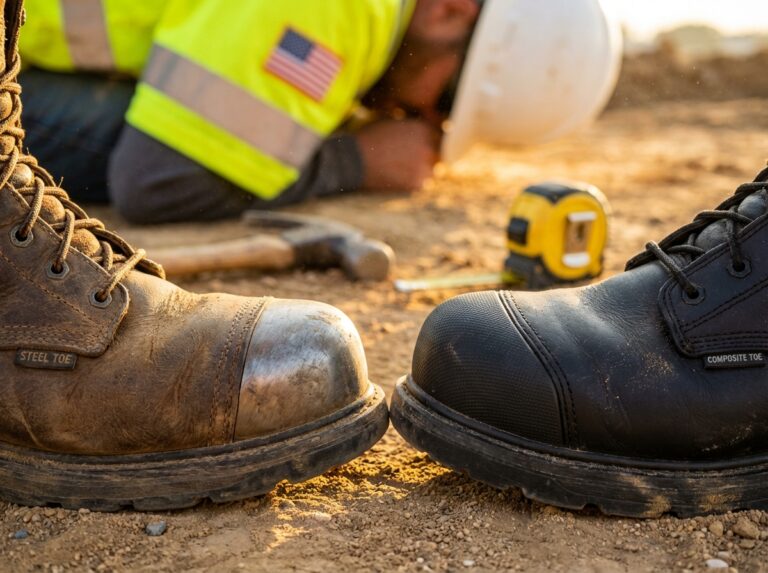
Steel toes are reliable but heavy. They can add significant weight, which increases leg fatigue for flat-footed workers. Composite toes are 15 percent lighter and do not conduct cold. For those with plantar fasciitis, choosing a lighter boot like the Red Wing ShieldLite can reduce strain. Always verify the manufacturer specs for the latest safety certifications. Choosing a boot with proper arch support and the correct safety ratings ensures you stay protected without sacrificing comfort.
Top 10 work boots and who they suit
Finding the right footwear when you have flat feet feels like a constant search for a balance between stability and cushioning. In 2025, the market has shifted toward smarter designs that address overpronation without sacrificing the ruggedness required for a job site. The following models represent the best options currently available for workers who need specific arch support and motion control.
Best Overall Supportive Boot
Red Wing Traction Tred Lite
This model has taken the top spot because it combines a classic welted look with modern weight savings. It features a Vibram LiteBase outsole that reduces the overall weight by about 25 percent compared to traditional wedge soles. For flat feet, the firm midsole provides the necessary torsional stability to prevent the foot from twisting inward. The boot includes a composite safety toe and meets ASTM F2413-18 standards for impact and compression. It is also Electrical Hazard rated. These work well for warehouse managers or residential contractors who spend all day on hard surfaces. The fit is true to size but offers a slightly wider platform in the midfoot. You can expect a short break-in period of about three days. The typical price is around 250 dollars. You can find more details in this guide on Best Work Boots 2025 – Most Comfortable Boots for Men & Women.
Best for Long Standing Shifts
Wolverine I-90 EPX CarbonMax
The standout feature here is the EPX anti-fatigue technology. It uses a dual-density footbed that brings cushioning close to the foot while a harder base layer returns energy. This helps flat-footed workers by absorbing the shock that their collapsed arches cannot handle. It carries an EH rating of 18kV and includes a waterproof membrane. These are ideal for logistics workers or factory staff on 12-hour shifts. The heel is designed to be stable to prevent the ankle from rolling. They run a bit large so many workers size down a half step. The price usually falls between 160 and 190 dollars. There is almost no break-in time required.
Best Removable Insole Friendly
Thorogood American Heritage Moc Toe
Many workers with flat feet prefer to use custom orthotics. This boot is famous for its deep footbed that accommodates thick inserts without making the boot feel tight. The dual-density removable insert that comes standard is already quite supportive. It uses a polyurethane wedge sole that meets slip resistance standards. These are the gold standard for electricians and carpenters. The leather is supple but the construction is sturdy. They offer various widths including EE and EEE. The price range is 240 to 280 dollars. For more on how these compare, check out The 5 Best Men’s Boots for Flat Feet | Stridewise.
Best for Wide Feet
Bearfoot Bruin
Flat feet often spread out, requiring a much wider toe box than standard boots provide. The Bruin offers a 15mm stack height and a zero-drop design. This allows the foot to sit naturally flat while providing a reinforced toe for safety. It is made with durable Crazyhorse leather and includes a gusseted tongue to keep out debris. It is a great choice for landscaping or outdoor manual labor. The fit is exceptionally wide. It comes in sizes up to Men’s 16. The price is approximately 250 dollars. These are resoleable which adds long-term value. You can see why they are recommended at The Best Wide Work Boots That Won’t Kill Your Feet | Anya’s Reviews.
Best Premium High Arch Support
White’s MP Boot with Arch-Ease
If you have flat feet that require aggressive support to prevent pain, the patented Arch-Ease system is a unique solution. It mimics the shape of a custom orthotic built directly into the leather and shank. This boot is heavy at 2.8 pounds but provides unmatched stability for heavy lifting. It is often used in forestry or heavy construction. The safety ratings vary by custom build but usually focus on durability and grip. The price is premium, often exceeding 550 dollars. The break-in is intense and can take two weeks of gradual wear.
Best Waterproof Supportive Boot
KEEN Utility Camden
This boot uses a carbon safety toe which is lighter than steel. The arch support is built into the midsole using a TPU shank for midfoot stability. It features a waterproof breathable membrane that keeps feet dry in muddy conditions. It meets ASTM standards for slip and oil resistance. This is a top pick for oil and gas workers or outdoor utility crews. The fit is generous in the toe box. The price sits around 215 dollars. It requires a moderate break-in period of about five days.
Best Budget Steel Toe
Caterpillar Second Shift
For a boot under 120 dollars, this provides surprising lateral stability. It features a steel toe and an EH rating. The Goodyear welt construction ensures the sole stays attached during heavy use. It is a solid entry-level boot for construction or masonry. The footbed is basic so many users swap it for a supportive insole. The leather is tough and needs a few days to soften. It fits true to size.
Best Modern Athletic Fit
Red Wing ShieldLite Athletics BOA
This release is designed for workers who want the feel of a sneaker with the protection of a boot. It uses a BOA fit system for quick adjustments. The composite toe and puncture-resistant midsole provide high-level safety. It is very light at 1.8 pounds. This is perfect for warehouse workers who walk several miles a day. The arch support is moderate. The price is 220 dollars. There is no break-in period.
Best Budget Supportive Option
Wolverine Rancher
This is a slip-on style that offers a surprisingly secure fit for flat feet. It has a soft toe but provides excellent everyday versatility. The square toe shape gives the forefoot plenty of room to splay. It is a favorite for ranch work or light industrial tasks. The price is very accessible at 130 dollars. It fits slightly wide. You can read more about its versatility at Work Boots for Flat Feet: Stepping Comfortably and Confidently.
Best for Heavy Construction
Danner Quarry
The Quarry is known for its triple-stitched durability and a firm midsole that offers 40 percent more torsional stability than average boots. This prevents the foot from collapsing on uneven terrain like gravel or rebar. It is waterproof and available with a steel toe. It is a heavy-duty choice for ironworkers or road crews. The fit is narrow in the heel but wide in the toes. The price is around 300 dollars. It requires a full week to break in properly.
Getting the right fit and using orthotics
Finding the right size starts with timing. You should measure your feet in the evening because they swell up to ten percent after a full day of movement. Stand up straight when you measure. Your weight needs to be fully distributed to get an accurate reading. Use a Brannock device at a store if possible. This tool measures three critical points including heel to toe length, arch length, and width. Most workers with flat feet find that a standard width is too narrow. About seventy percent of people with fallen arches require an EE width to stay comfortable. You should add half an inch of space beyond your longest toe to prevent cramping during long shifts.
The In Store Fitting Process
Arch Support Check
When you try on a boot, the arch support must align with your natural foot shape. You can test this by pressing your thumb under the arch area while wearing the boot. If you feel a significant gap, the support is not hitting the right spot. Alternatively, you can perform the “wet footprint test” at home: step on paper with wet feet. If your footprint is full and wide, you have flat feet and require a boot with a firm heel counter and a supportive midsole to prevent the inward roll.
Heel and Midfoot Security
The heel should stay secure without pinching. A small amount of slip between a quarter and a half inch is normal for new leather boots. If your heel lifts more than that, you will likely deal with blisters. Ensure the midfoot feels snug. If the boot feels loose in the middle, your foot will slide forward. This movement causes your toes to hit the safety cap, which leads to nail damage and pain.
Using Socks and Orthotics
Always bring your actual work socks to the fitting. Thick wool or padded synthetic socks change how a boot fits. If you plan to use orthotics, remove the factory footbed before sliding yours in. This ensures the boot volume remains correct. Many flat footed workers benefit from the Best Work Boots for Women with Flat Feet or Plantar Fasciitis – Ergonx which often feature structured support built directly into the design. If you use custom inserts, make sure the boot has enough depth. Some models offer an extra deep toe box to accommodate thick medical orthotics.
Choosing Aftermarket Insoles
Off the shelf insoles are a good starting point for mild flat feet. Products like Superfeet Green use EVA foam to provide medium support. If you need more durability, look for polyurethane materials. These do not compress as quickly as standard foam. While many workers prefer the cushioning of athletic running insoles, these might not provide the torsional stability needed for uneven terrain. Work boots like the Wolverine Rancher are designed for specific industrial stresses, so ensure your insert matches that intensity. For flat feet, avoid very high arch inserts. An arch height under ten millimeters prevents painful pressure points on the midfoot. You should look for insoles that offer a deep heel cup to stabilize the heel and prevent overpronation.
Prescription Orthotics
Custom prescription orthotics are a different level of care. They are molded to your specific foot shape by a professional. Studies show they can reduce pain by eighty percent for those with severe overpronation. You should consider custom options if store bought inserts fail to provide relief after four weeks. A podiatrist can identify if your gait requires specific corrections that a standard boot cannot provide.
Break In Procedures and Red Flags
New boots require a gradual introduction. Wear them for one or two hours a day at home first. This allows the leather to soften without damaging your skin. You can add your supportive insoles gradually over a week. If the boot pinches your toes or causes sharp pain after thirty minutes, it is likely the wrong fit. Leather will stretch slightly, but it will not change its fundamental shape. If you have very broad feet, checking The Best Wide Work Boots That Won’t Kill Your Feet | Anya’s Reviews can help find models with a wider toe box designed for natural foot spread.
Signs of a Poor Fit
- Heel slipping more than half an inch after the break in period
- Toes banging against the safety toe cap while walking downhill
- Persistent numbness in the toes or midfoot
- Sharp pain in the shins or lower back during the shift
- Hot spots that turn into blisters every time you wear the boots
When to Consult a Professional
You should see a podiatrist or an occupational health professional if you experience swelling that does not go away overnight. Persistent pain lasting more than two weeks is a sign of an underlying issue. If you notice uneven wear patterns on the soles of your boots, it indicates a gait problem. A specialist can help you choose the right combination of boot and insert to prevent long term joint damage in your knees and hips.
Care maintenance and when to replace work boots
Maintaining the structural integrity of your footwear is a necessity when you deal with flat feet. The way your foot interacts with the ground changes when the medial arch collapses. This puts specific types of stress on the materials of your boots. If you do not care for them properly, the support features you rely on will fail long before the rest of the boot wears out.
Cleaning and Protecting the Exterior
Routine Cleaning
You should remove dirt and debris after every shift. Use a soft brush to get into the seams where the upper meets the sole. If mud stays on the leather, it draws out moisture and leads to cracking. Use a damp cloth with a small amount of mild soap for stubborn stains. Avoid soaking the boots entirely. If the leather gets too wet, the fibers can stretch and lose the firm hold needed to prevent overpronation.
Conditioning for Flexibility
Leather needs regular hydration to stay supple. Apply a high quality conditioner or mink oil once a month. This keeps the leather from becoming brittle. Brittle leather cracks at the flex points near the toes. For those with flat feet, the boot needs to flex correctly while maintaining lateral stability. If the leather is well conditioned, it will move with your foot instead of resisting it. This reduces the risk of blisters and hot spots during long shifts.
Waterproof Membrane Care
Many modern boots use membranes like Gore-Tex to keep feet dry. These layers can become clogged with salt from sweat or fine dust. Cleaning the inside of the boot with a damp cloth helps maintain breathability. You should also reapply a durable water repellent spray to the outside every three months. This prevents the leather from becoming waterlogged. A heavy, wet boot increases fatigue and puts extra strain on your arches. Keeping the exterior water resistant ensures the boot stays lightweight.
Drying and Rotation Strategies
The Importance of Air Drying
Moisture is the enemy of boot longevity. After a shift, remove the insoles and let the boots dry at room temperature. You must avoid placing them near a radiator or using a high heat dryer. Temperatures above 100 degrees Fahrenheit can melt the adhesives that bond the outsole to the midsole. Heat also causes the leather to shrink and warp. This warping can ruin the alignment of the arch support. If the boot loses its shape, it will no longer provide the corrective path your foot needs.
Rotating Multiple Pairs
If your budget allows, own two pairs of boots. Rotating them gives each pair 48 hours to dry completely. This is vital for the foam in the midsole. When you stand on a boot for ten hours, the cushioning compresses. It needs time to decompress and return to its original shape. For workers with flat feet, this recovery time ensures the arch support remains firm. Constant compression without rest leads to permanent flattening of the internal support structures.
Managing Insoles and Orthotics
Insole Preservation
The removable footbed is often the first part to fail. You should wash your insoles by hand with cool water and air dry them. Never put them in a washing machine. Check for thinning under the ball of the foot and the heel. These are the areas where flat feet apply the most pressure. If you use aftermarket inserts for proper arch support, they usually last about six months under heavy use. Once the foam feels hard or stays flat after you take the boot off, it is time for a replacement.
When to Replace Your Boots
Midsole and Arch Failure
The most critical indicator for replacement is midsole compression. If you notice visible wrinkles in the foam or if the boot feels “dead” when you walk, the shock absorption is gone. For flat feet, a collapsed midsole means your ankles will roll inward more than usual. This leads to knee and back pain. If you place your boots on a flat table and they look tilted toward the inside, the structural support has failed.
Outsole Wear Patterns
Check your tread regularly. If the lugs are worn down to less than a quarter inch, you lose traction. Pay attention to uneven wear. Flat-footed workers often wear down the inner edge of the sole faster. This creates an unstable platform that worsens overpronation. If the tread is smooth or if you can see the internal puncture plate, the boots are no longer safe for the job site.
Safety and Material Integrity
You must replace boots immediately if the safety toe is exposed or if the leather has deep tears. Any loss of safety certification markings on the tongue or side makes the boot non-compliant with OSHA standards. Typical replacement timelines follow these general rules.
| Usage Level | Hours per Week | Replacement Timeline | Key Signs of Wear |
|---|---|---|---|
| Heavy Use | 40 plus hours | 6 to 9 months | Compressed midsoles |
| Medium Use | 20 to 40 hours | 9 to 12 months | Tread loss of 1/4 inch |
| Light Use | Under 20 hours | 12 to 18 months | Cracked leather |
Recordkeeping for Safety
Keep a digital folder with photos of your purchase receipts and the safety rating tags. Document the date you put the boots into service. This helps you track the lifespan and provides proof of PPE compliance if your employer or a safety inspector asks. Tracking these dates ensures you never work in a boot that has lost its protective capabilities.
Final takeaways and recommendations
Flat feet change the way your body handles a long shift. Choosing the right boot is about more than just padding; you need a structure that holds your foot in a neutral position to prevent the medial arch from collapsing. The most important features for flat feet are a firm arch plus a stable heel counter. A deep heel cup helps control motion and prevents your foot from sliding around inside the boot. You should look for midsoles made of polyurethane, as this material absorbs shock better than standard foam. If you work on concrete, cushioning is vital to reduce the fatigue that sets in after eight hours.
Your job type should dictate your choice. Construction workers need torsional stability, and boots like the Danner Quarry provide significantly more stability than average models. Warehouse workers might prefer something lighter like the Red Wing ShieldLite, which weighs only 1.8 pounds and reduces strain during long walks. Budget is another factor; you can find reliable options like the Caterpillar Second Shift for around 115 dollars. If you want premium support, White’s MP Boot uses a specialized Arch Ease system that mimics the natural arch, though it comes at a higher price point.
Action Checklist for Your Next Purchase
Measure your feet in the evening
Your feet swell up to ten percent by the end of the day. Stand up while measuring. Add half an inch to your longest toe for the best fit. Use a Brannock device if possible. Many people with flat feet need an EE width for comfort.
Identify job hazards
Check if you need steel or composite toes. Composite toes are fifteen percent lighter. They reduce fatigue for flat footed workers. Look for ASTM ratings for electrical hazards. Ensure the boot meets your specific site requirements for slip resistance.
Prioritize arch and heel features
Press your thumb under the arch area. There should be no gap. Ensure the heel counter is firm. This prevents the ankle from rolling. A stable base reduces the risk of trips on uneven ground.
Test with your own orthotics
Bring the insoles or socks you plan to wear. Some boots have more depth than others. Models like the Alden Indy offer twenty millimeters of extra room. This is essential for custom inserts. You can find more details on specialized fits in this guide to The 5 Best Men’s Boots for Flat Feet | Stridewise.
Verify safety ratings
Check the manufacturer specs for current models. Look for labels that confirm puncture resistance. Verify waterproof membranes if your job requires them. Ensure the boots meet the latest OSHA guidelines for construction safety.
Prioritize the fit and safety ratings over the brand name. Every foot is different. What works for a coworker might not work for you. If possible, test the boots in person. Walk around the store to check for heel slip. A quarter inch of slip is normal. Anything more can cause blisters. A good boot should feel supportive right away. Do not rely on a long break in period to fix a bad fit. Your safety and comfort on the job are worth the investment in quality footwear.
References
- The 5 Best Men's Boots for Flat Feet | Stridewise — The 5 Best Men's Boots for Flat Feet · White's MP Boot · Alden Indy · Thorogood Moc Toe · Wolf & Shepherd Chelsea Blitz · R.M. Williams Dynamic Flex …
- Work Boots for Flat Feet: Stepping Comfortably and Confidently — The Wolverine Rancher is a top choice for flat feet, offering comfort, support, and everyday versatility. Available in both soft toe and safety …
- Best Work Boots 2025 – Most Comfortable Boots for Men & Women — Red Wing's Traction Tred Lite finally took over as the best overall work boot, displacing the excellent Keen Utility Cincinnati from its multi-year reign.
- The Best Wide Work Boots That Won't Kill Your Feet | Anya's Reviews — The Bearfoot Bruin is a fully leather barefoot work boot, with a reinforced toe. Made with durable Crazyhorse leather and a gusseted tongue to keep debris out, …
- The Best Work Boots of 2025 | GearJunkie Tested — Protect your feet with one of our picks for the best work boots, including boots from Caterpillar, Danner, and more!
- Top 10 Work Boots for Men with Flat Feet in 2025 – POIZON — Dr.Martens X Rick Owens 1460 Dmxl Jumbo Lace Boots 'Black Beige' are a bold choice for men with flat feet. Priced at $344, these boots combine …
- Best Work Boots 2025 | Most Comfortable Work Boots – YouTube — If they have a flat sole? They are no better than the Keen Tennis shoes that the company call boots. A WORK BOOT has a heel, a rugged sole …
- Work Boots for Men | Carolina Shoe — Shop the best work boots for men at Carolina. From slip-on boots and waterproof boots to must-have steel-toe styles, you'll find a trusted fit.
- Best Work Boots for Women with Flat Feet or Plantar Fasciitis – Ergonx — A key treatment for plantar fasciitis and flat feet is choosing work boots with proper arch support. Boots with orthotic insoles and structured arch support …
Legal Disclaimers & Brand Notices
The information provided in this article is for informational and educational purposes only and does not constitute professional medical advice, diagnosis, or treatment. Always seek the advice of a qualified podiatrist, physician, or other healthcare provider with any questions you may have regarding a medical condition, such as plantar fasciitis or overpronation, or before making any decisions related to medical treatments or orthotic devices.
All product names, logos, and brands mentioned in this text are the property of their respective owners. This includes, but is not limited to:
- Red Wing, Thorogood, Wolverine, Danner, and KEEN Utility
- Vibram, Gore-Tex, and BOA
- Caterpillar, White’s Boots, and Bearfoot
All company, product, and service names used in this article are for identification purposes only. Use of these names, logos, and brands does not imply endorsement or affiliation.