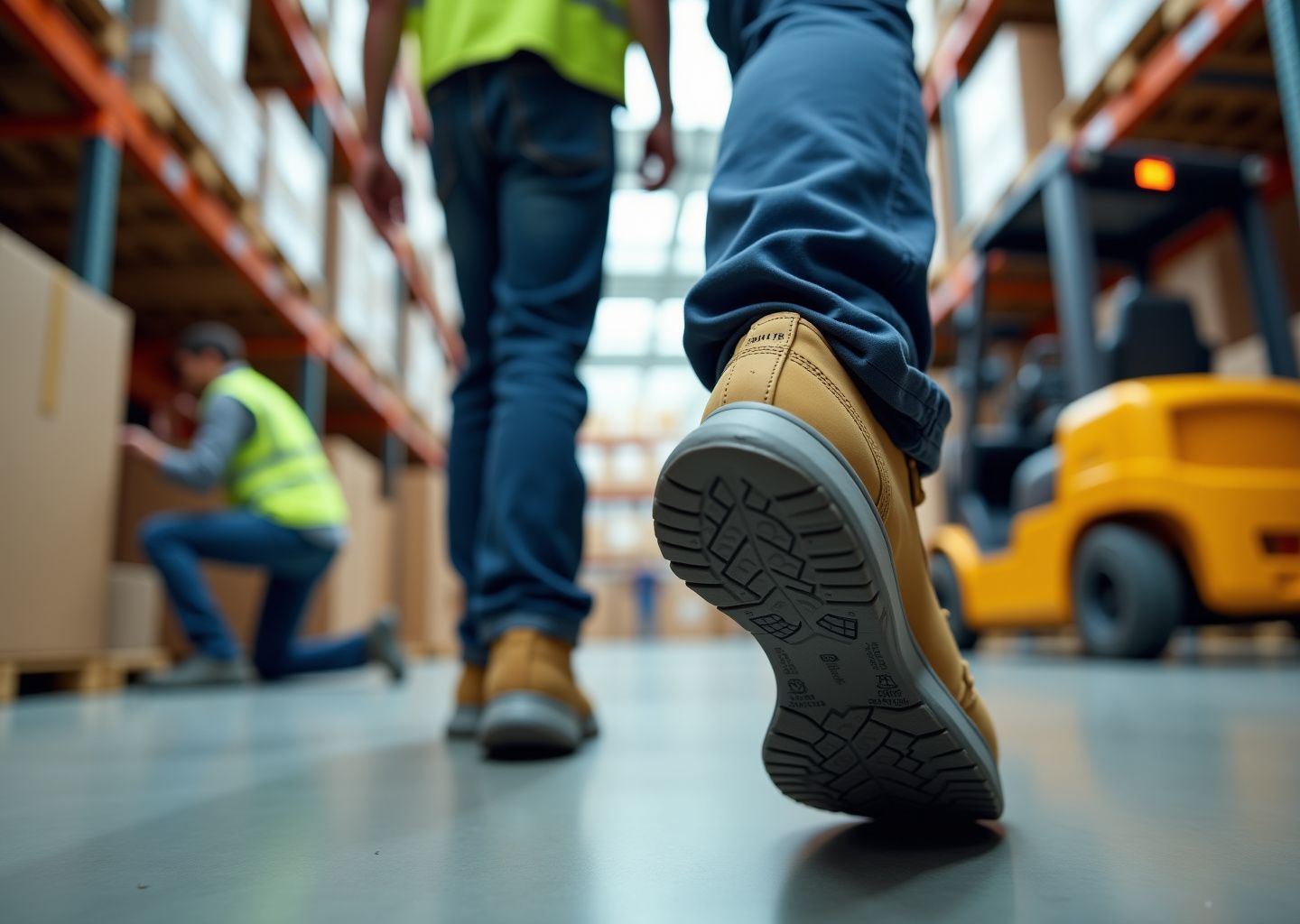
Warehouse work demands protective footwear that balances safety, comfort, and low weight. This guide explores how to choose the best lightweight safety shoes for warehouse workers in the U.S., covering standards, essential features, fit and sizing, top options and real‑world buying tips to help you reduce fatigue and stay protected on the job.
Why Lightweight Matters in Warehouse Footwear
When you walk ten miles a day on concrete, every ounce on your feet feels like a pound by the end of your shift. It’s not an exaggeration. Ergonomic studies consistently show that for every extra pound of footwear, your body expends about 5-10% more energy. For a warehouse worker who can easily cover the distance of a half-marathon in a single day, the weight of your safety shoes isn’t a minor detail; it’s a critical factor that directly impacts your fatigue, productivity, and long-term health. The shift towards lighter safety footwear isn’t just a trend, it’s a direct response to the physical demands of modern logistics.
The daily routine in a warehouse is a full-body workout. You’re lifting heavy boxes, pushing pallet jacks, and climbing racking systems. Order pickers might ascend and descend ladders or powered lifts dozens of times per shift, while shipping and receiving staff are constantly on the move, loading and unloading trailers. Even forklift operators, who spend much of their time seated, still need to frequently mount and dismount their vehicles, often on slick surfaces. Each of these movements requires lifting your own feet. When your boots weigh two or three pounds each, like many traditional steel-toe models, you are lifting hundreds, if not thousands, of extra pounds over the course of a day. This added load contributes directly to cumulative strain on your leg muscles, joints, and lower back, increasing the risk of musculoskeletal disorders by as much as 20-30% over time.
This is where the contrast between traditional heavy boots and modern lightweight safety shoes becomes stark.
Fatigue and Maneuverability
Heavy steel-toe boots can feel like you’re dragging anchors by hour eight. The constant effort to lift them slows you down, reduces your agility, and drains your energy. Lightweight shoes, often weighing under 1.25 pounds (20 ounces) per shoe, feel more like athletic sneakers. This reduction in weight allows for quicker, more natural movements. You can pivot faster, climb more easily, and respond to your surroundings with less effort. This improved maneuverability not only boosts productivity but also reduces the risk of trips and falls, which are common in fast-paced environments.
Thermal Comfort
Another often-overlooked factor is how your feet feel inside the shoe. Steel is an excellent conductor of temperature. In a cold storage facility, steel toes can feel like ice blocks against your feet. In a hot, non-climate-controlled warehouse, they can absorb and retain heat. Modern composite and carbon fiber toes are poor thermal conductors, meaning they help keep your feet closer to a comfortable, stable temperature regardless of the ambient environment. This thermal regulation, combined with breathable mesh uppers common in lightweight designs, significantly improves all-day comfort.
Durability and Protection Tradeoffs
Of course, there can be tradeoffs. While a high-quality composite toe offers the same ASTM-rated impact protection as steel, a heavy-duty leather boot is inherently more resistant to abrasion and cuts than a fabric or mesh upper. The thick, rugged outsoles on traditional boots might also outlast the more flexible soles found on some athletic-style safety shoes, especially in environments with rough flooring or chemical exposure. The key is understanding your specific work environment to strike the right balance.
Your job role and work area dictate the ideal balance between weight and protection. An order picker in a dry goods facility who walks 15 miles a day will benefit immensely from the lightest possible shoe that meets basic safety toe requirements. Their primary enemy is fatigue. A forklift operator needs footwear with a defined heel for stability and a certified Electrical Hazard (EH) rating, but can still opt for a lightweight composite toe model. Someone in shipping and receiving, however, might need to prioritize a puncture-resistant plate and a more durable upper to guard against dropped pallets, nails, and sharp debris, even if it adds a few ounces. Similarly, workers in cold storage need insulated boots, while those on wet or greasy floors must prioritize a top-tier, slip-resistant outsole above all else.
To help you decide, here’s a quick checklist for when to prioritize weight versus when to focus on extra protection.
- Prioritize lightweight when: Your job involves extensive walking, climbing, or constant movement; you work in a dry, climate-controlled environment; your primary hazards are impact and compression (toe protection) without significant puncture or cut risks.
- Prioritize extra protection when: You work in an environment with frequent puncture hazards like nails or metal shards (shipping/receiving); you require metatarsal guards for protection against heavy falling objects; your job involves exposure to harsh chemicals, extreme heat, or requires full-boot coverage for ankle support and protection.
Key Safety Standards Performance and Features to Look For
Navigating the world of safety shoe specs can feel like learning a new language. But understanding the key standards and features is the most important step in protecting your feet. It’s not just about picking a shoe that looks good; it’s about choosing one that is certified to handle the specific risks of your warehouse job. Let’s break down exactly what to look for on the label and in the shoe itself.
Understanding U.S. Safety Standards
In the United States, all legitimate safety footwear must meet standards set by ASTM International. The main standard you need to know is ASTM F2413. This is the Standard Specification for Performance Requirements for Protective (Safety) Toe Cap Footwear. If a shoe doesn’t meet this standard, it isn’t a true safety shoe. You can usually find the ASTM rating printed on a tag inside the tongue.
Here’s what the codes on that tag mean in plain English:
- I/75 C/75
This is the most common rating for protective toes. I/75 means the toe cap can withstand an impact of 75 foot-pounds, which is like a 50-pound weight being dropped from about 1.5 feet. C/75 means it can handle a compressive load of 2,500 pounds before the toe cap starts to crack or crush. For a warehouse environment with falling boxes and rolling pallet jacks, this is the minimum protection you should accept. - EH
This stands for Electrical Hazard protection. EH-rated shoes have non-conductive soles and heels that can withstand 18,000 volts at 60 Hz for one minute with no current flow. This is crucial for anyone working near powered equipment like forklifts or conveyor systems, as it provides a secondary source of protection against accidental electrocution. - SD
Static Dissipative footwear is designed to reduce the buildup of static electricity by conducting it from your body to the ground. This is important in environments with sensitive electronics or flammable materials. SD shoes are rated to a specific range of electrical resistance. - PR
This indicates the shoe has a Puncture-Resistant plate built into the sole. This plate is designed to prevent sharp objects like nails, screws, or broken pallet fragments from piercing through the bottom of your shoe.
Another critical standard is ASTM F2913, which tests for slip resistance. This test measures the shoe’s coefficient of friction (COF) on wet or oily surfaces. While there’s no official pass/fail score, a higher COF value generally means better grip. Look for manufacturers who openly share their COF test results, especially for wet and greasy conditions.
Key Protective Features and Materials
Protective Toe Caps: Steel vs. Composite vs. Alloy
The type of toe cap is one of the biggest factors in a shoe’s weight and comfort.
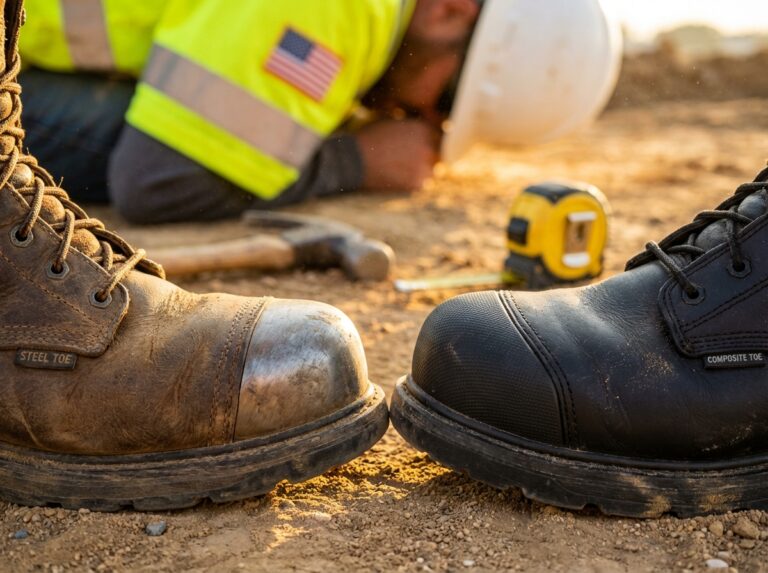
- Steel Toes are the traditional choice. They offer maximum protection but are the heaviest and can be bulky. They also conduct temperature, making them cold in the winter and hot in the summer.
- Composite Toes are made from non-metal materials like carbon fiber, plastic, or Kevlar. They are significantly lighter than steel, don’t conduct heat or cold, and won’t set off metal detectors. For typical warehouse hazards like falling boxes or rolling carts, composite toes provide more than enough protection and are far more comfortable for long shifts.
- Alloy Toes are made from lightweight metals like aluminum or titanium. They offer similar protection to steel but are 30-50% lighter. They can be a good middle ground if you want something thinner than composite but lighter than steel.
Puncture-Resistant Plates
If your warehouse floor has debris, a puncture-resistant plate is a must. These are typically made of steel or flexible woven fabrics like Kevlar. A full-length plate offers the most protection, covering your entire foot from heel to toe.
Slip-Resistant Outsoles
The outsole is your first line of defense against slips and falls. Look for outsoles made from high-traction rubber compounds designed to resist oil and grease, such as nitrile rubber. The tread pattern is also important; deep lugs and channels help move water and oil away from the sole’s surface, improving contact with the floor. The most reliable indicator is a shoe that meets the ASTM F2913 standard for slip resistance on wet and contaminated surfaces.
Waterproofing vs. Breathability
Many lightweight shoes use a waterproof membrane to keep your feet dry. However, this can sometimes trap sweat and heat. For dry warehouses, a highly breathable shoe with a mesh upper might be more comfortable over a long shift. If you work in wet environments or a cold storage facility, a waterproof boot is essential.
Cushioning and Support
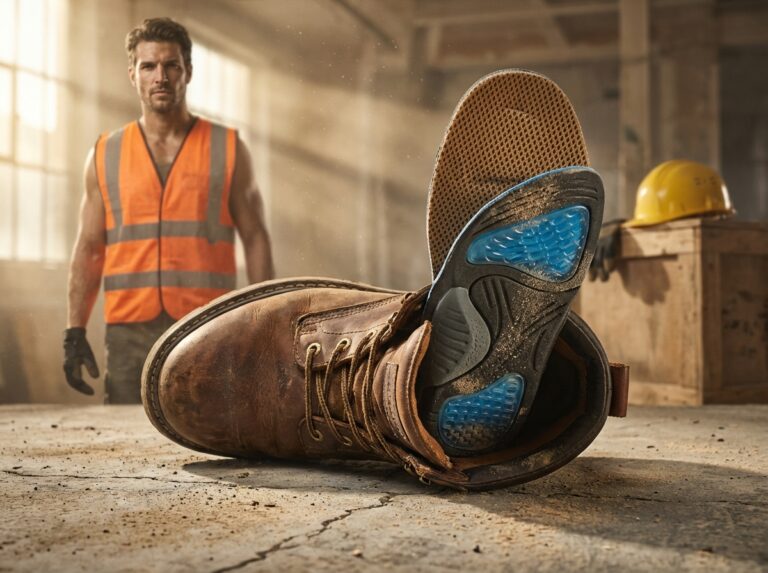
Long hours on concrete floors demand good cushioning. Look for shoes with thick midsoles made from materials like EVA foam, which absorbs shock. A quality, removable insole can provide arch support and can be replaced with a custom orthotic if needed. This is a key feature, as safety toe caps don’t leave much room for adjustments, so ensuring your orthotic fits from the start is crucial.
What Does ‘Lightweight’ Actually Mean?
There’s no official industry definition, but a good benchmark for a lightweight safety shoe is anything under 1.25 pounds (or 20 ounces) per shoe. Some athletic-style safety sneakers can even come in under one pound. For comparison, traditional steel-toe work boots can easily weigh 2.5 pounds or more per boot. Manufacturers typically measure the weight of a single shoe, usually a men’s size 9. Always check the product specifications, as marketing terms can be misleading. Don’t hesitate to ask for third-party lab test data or check the detailed product spec sheets on the manufacturer’s website to verify any claims about weight, slip resistance, or safety ratings.
How to Choose and Compare Top Lightweight Safety Shoes
Navigating the crowded market for safety footwear can feel overwhelming. The key is to start with your specific job and its unique hazards, not with a brand or a cool-looking shoe. This practical guide will walk you through a simple decision-making process to find the perfect lightweight safety shoe for your warehouse role.
A Step-by-Step Guide to Your Ideal Shoe
Think of this as a decision tree. Follow these three steps to systematically narrow down your options from hundreds to just a handful of contenders.
- Identify Your Primary Hazards.
Your daily tasks dictate the protection you need. Different warehouse roles face different risks.- Order Pickers & Packers: Your biggest enemies are fatigue from walking miles on concrete and impact from dropped items. Your priorities are minimal weight, excellent cushioning, and a reliable protective toe.
- Forklift Operators: You face impact and compression risks from pedals and vehicle traffic. You also work around large batteries and electrical systems, making Electrical Hazard (EH) protection crucial.
- Shipping & Receiving Staff: You handle broken pallets, loose nails, and other debris. Puncture resistance is non-negotiable, alongside a strong safety toe for protection against heavy freight.
- Cold Storage Workers: You need all the standard protections plus insulation. A composite toe is a must, as steel gets dangerously cold. For cold storage, look for models that also include insulation (e.g., 200g Thinsulate™).
- Match Protective Features to Your Hazards.
Once you know your risks, you can look for the corresponding ASTM ratings on the shoe’s tongue or product sheet.- Impact/Compression Risk: You need an ASTM F2413-rated protective toe (PT). The choice between steel, composite, or alloy comes down to weight and environment.
- Puncture Risk: Look for the PR rating. This means the shoe has a built-in plate to stop sharp objects from piercing the sole. Always check your employer’s safety policy.
- Slip Risk: Every warehouse worker needs a slip-resistant outsole. Check for an ASTM F2913 rating or look for reputable outsole brands known for their grip on smooth concrete.
- Electrical Risk: If you’re a forklift operator or maintenance worker, an EH-rated shoe is essential to protect against accidental contact with live circuits.
- Select Your Shoe Style.
The right style supports your daily movements.- Low-Cut Safety Shoes: These look and feel like athletic sneakers. They offer maximum flexibility and are the lightest option, making them perfect for order pickers who are constantly moving, bending, and walking.
- Mid-Cut Work Shoes: Offering a bit more ankle support and debris protection, these are a great middle ground for general warehouse duties and forklift operators who want stability without the bulk of a full boot.
- Lightweight Ankle Boots: These provide the most protection against debris and offer superior ankle support. They are the best choice for shipping and receiving docks where conditions can be messy and unpredictable.
Making Sense of Materials and Features
Puncture Plates and Uppers
Only choose a puncture-resistant (PR) shoe if you genuinely work around sharp floor debris. The plate adds stiffness and weight, which is unnecessary for a picker in a clean aisle. For uppers, balance breathability and waterproofing. A dry, climate-controlled warehouse calls for breathable mesh uppers to keep feet cool. If you work on loading docks or in wet processing areas, a waterproof membrane is essential, but be aware it can reduce breathability.
Your Comparison Checklist
When you’ve narrowed your choices to a few pairs, compare them using this framework. The best shoe for you will strike the right balance across these attributes.
| Attribute | What to Look For |
|---|---|
| Weight | Aim for under 20 oz (1.25 lbs) per shoe for a men’s size 9. Lighter is always better for reducing fatigue. |
| Toe Type | Composite or carbon fiber for most roles. Steel only if required by your employer for extreme crush hazards. |
| Slip Rating | Look for an ASTM F2913 rating or trusted outsole technologies from brands like Vibram. |
| Sole Compound | Nitrile or rubber compounds offer good grip on oily or wet surfaces. EVA midsoles provide superior cushioning. |
| Puncture Resistance | Only if needed. A “PR” rating on the label is a must for shipping/receiving roles. |
| Breathability | Mesh panels and moisture-wicking liners for indoor, dry environments. |
| Price | Expect to pay $120-$180. Shoes over $200 often feature more durable construction and premium materials. |
| Warranty | A minimum 6-month warranty against manufacturing defects is standard. |
Finding the Perfect Fit and Value
Reputable Brands to Consider
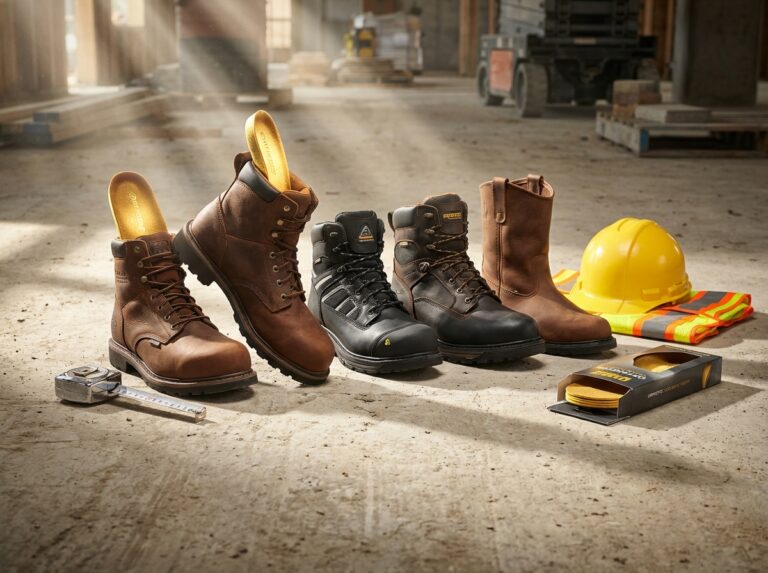
Instead of recommending specific models that change yearly, focus on brands with a proven track record in lightweight safety. Look at current offerings from Timberland PRO and Caterpillar for durable, all-around options. For athletic-inspired comfort, check out Reebok Work and New Balance Industrial. KEEN Utility is known for its generous fit and comfortable toe boxes, while Wolverine often leads with innovative materials like carbon fiber toes.
The Fit Test
Never buy safety shoes without trying them on properly. Go to a store in the late afternoon when your feet are slightly swollen. Wear the same thick work socks you use on the job. There should be about a half-inch of space between your longest toe and the end of the safety cap. Walk around, preferably on a hard surface or an anti-fatigue mat if available, to simulate your work environment. The shoe should feel comfortable immediately; a stiff or pinching shoe is unlikely to “break in” enough to be comfortable for a 10-hour shift.
Budget, Returns, and Warranties
A budget of $120-$180 will get you a quality, lightweight safety shoe that should last 9-12 months. Paying more often gets you a longer-lasting midsole that won’t compress and lose its cushioning, better arch support from a replaceable insole, and a more advanced, durable outsole. Always buy from a retailer with at least a 30-day return policy, allowing you to wear the shoes at home for a few hours to be certain of the fit. A solid manufacturer’s warranty shows the company stands behind its product’s durability.
Frequently Asked Questions
Navigating the world of safety footwear can bring up a lot of questions. After covering how to choose the right pair, let’s tackle some of the most common queries we hear from warehouse workers and safety managers. Here are direct answers to help you make a confident and compliant choice.
How do I care for my shoes to maintain their slip resistance?
The key is keeping the outsole clean. Dirt, dust, and grime can fill the treads on your shoe’s sole, reducing its ability to grip the floor. At least once a week, use a stiff brush and mild soap and water to scrub the outsoles clean. Let them air dry completely. Regularly inspect the tread depth; if it’s worn down by more than 50% in key areas, the shoe’s slip resistance is compromised, and it’s time for a new pair.
Can safety shoes be machine washed?
It’s highly discouraged. The high heat and tumbling action of a washing machine and dryer can break down the adhesives that hold the shoe together, damage the protective toe cap, and ruin leather or synthetic upper materials. This can compromise the structural integrity and safety features of the shoe. The best way to clean them is by hand with a brush, cloth, and appropriate cleaner, then letting them air dry away from direct sunlight or heat sources.
When should I replace my safety shoes?
For a full-time warehouse worker, a good rule of thumb is to replace your shoes every six to twelve months. However, you should replace them immediately, regardless of age, if they show visible damage like cracks in the sole, separation of the upper from the midsole, or exposed toe caps. Most importantly, any shoe that has sustained a serious impact or compression event must be replaced, as the safety toe’s integrity could be compromised even if there’s no visible damage.
Do lightweight shoes increase my risk of injury?
No, quite the opposite. As long as a lightweight shoe carries the proper ASTM F2413 rating for the hazards in your workplace (e.g., protective toe, EH rating), it does not increase your risk. In fact, by reducing foot and leg fatigue, lightweight footwear can actually lower your risk of injury. Fatigue is a leading cause of workplace accidents, including slips, trips, and falls. A lighter shoe allows you to stay more alert and agile throughout your shift, improving overall safety.
Final Recommendations and Next Steps
You’ve learned about the materials, standards, and top models available. Now it’s time to make a decision. Choosing the right lightweight safety shoe isn’t just about picking a brand; it’s about creating a personalized safety system for your feet. The core takeaway from this guide is that modern safety footwear allows you to select protection that directly matches your daily tasks, eliminating the fatigue that comes from wearing overbuilt, heavy boots. The days of a one-size-fits-all steel toe boot are over. Today’s technology, from carbon fiber toes to advanced slip-resistant outsoles, provides targeted safety without the weight, a critical factor when you’re walking up to 15 miles on concrete during a single shift.
The most important balance to strike is between targeted protection and all-day comfort. Every feature adds weight, so the key is to identify what you truly need. An order picker who spends their day walking and climbing might prioritize an athletic shoe under 1.25 pounds with a composite toe and excellent cushioning to reduce the risk of musculoskeletal disorders. In contrast, a receiving dock worker constantly around pallets and potential debris should prioritize a shoe with an ASTM F2413-rated puncture-resistant plate, even if it adds a few extra ounces. The goal is to avoid paying the physical price for features your specific job doesn’t demand. Remember, every extra pound of footwear can increase the energy you expend by 5-10%, which adds up significantly over thousands of steps.
Before you even consider style or brand, your first step must be verification. Look for the ASTM F2413 label printed on the tongue. This is your non-negotiable guarantee that the shoe has been tested to withstand specific hazards like impact (I/75), compression (C/75), and others relevant to your job (EH, PR). Without this label, you are not wearing certified safety footwear, regardless of what the online description claims. Always check for this label first; it’s the most important feature of any safety shoe.
To simplify your final selection process, follow this short checklist. It will help you move from understanding your needs to making a confident purchase.
- Conduct a Personal Hazard Assessment.
Think through your typical shift. Do you work on wet or oily surfaces? You need a sole that meets ASTM F2913 slip-resistance standards. Are you near live electrical equipment like charging stations for forklifts? An Electrical Hazard (EH) rating is essential. Do you handle heavy objects that could fall? An I/75 C/75 safety toe is non-negotiable. Are nails, screws, or sharp metal scraps a risk? Look for a PR rating. Be honest about your daily environment. - Confirm the Required Standards.
Once you know your hazards, match them to the codes on the ASTM label inside the shoe. If your workplace has a safety manager, confirm any site-specific requirements. Don’t guess; your safety depends on meeting the correct standard for the job you perform. - Perform a Thorough Try-On and Walk Test.
Always try on shoes at the end of the day when your feet are slightly swollen. Wear the same type of socks you use for work. There should be about a half-inch of space between your longest toe and the end of the shoe. The safety toe should not rub or pinch your toes when you walk or squat. Walk around for at least 10-15 minutes, preferably on a hard surface, to check for any pressure points or heel slippage. - Check the Retailer’s Return Policy.
A good fit in the store doesn’t always translate to comfort over an 8 or 12-hour shift. Buy from a retailer with at least a 30-day return policy that allows you to wear the shoes at work. This is the ultimate test and protects you from getting stuck with a pair that causes pain or fatigue. - Plan for Replacement.
Lightweight safety shoes are tools, and like all tools, they wear out. Plan to replace your shoes every 6 to 12 months. Inspect them regularly for worn-down tread (less than 2mm deep), cracks in the midsole, or any damage to the safety toe area. Using shoes past their effective lifespan compromises their protective features, especially slip resistance.
For those outfitting an entire crew, consulting with your company’s safety manager is the best next step to ensure compliance and explore bulk purchasing options. For individual workers, we encourage you to use this guide and the checklist to make an informed choice. The right pair of lightweight safety shoes is a powerful tool. It does more than just protect you from immediate injury; it actively reduces the cumulative fatigue and strain that builds up over long shifts, helping you stay safer, more focused, and more comfortable day after day.
Sources
- Carolina Work Boots: U.S.Safety Footwear Demand in 2025 — Logistics and Warehousing – With e-commerce growth, warehouse and delivery workers rely heavily on lightweight, flexible boots that don't slow …
- Work Shoes Market Size, Demand & Growth 2025 to 2035 — In 2025, the global work shoes market is projected to reach approximately USD 460.4 million, with expectations to grow to around USD 714.9 million by 2035.
- Why More Workers Are Choosing Lightweight Safety Shoes Over … — The shift toward lightweight safety footwear reflects a larger change in how we think about workwear: it should work with you, not against you.
- Work Boots Market Trends, Size, Share & Forecast, 2025-2032 — Work Boots Market size is growing with a CAGR of 3.9% in the prediction period and it crosses US$ 23.14 Billion by 2032 from US$ 17.7 Billion in 2025.
- Safety Shoes Market Growth Analysis – Size and Forecast 2025-2029 — The global Safety Shoes Market size is expected to grow USD 2209.9 million from 2025-2029, expanding at a CAGR of 6.5% during the forecast period.
- Latest Trend in Safety Shoes: 2025 Innovations & Market Insights — Discover the latest trend in safety shoes: lightweight designs, smart technology, and sustainable materials. What's driving the 2025 market?
- Top Safety Boot Trends in 2025: Style Meets Safety – Lucas Workwear — Why it's trending: Workers want all-day comfort without sacrificing safety. ✓ Flexible, sneaker-like soles ✓ Breathable mesh uppers ✓ Shock- …
- U.S. Work Boot Market Size, Growth, Analysis and Forecast 2032 — The U.S. Work Boot Market size was valued at USD 3912.76 million in 2018, reached USD 5284.38 million in 2024, and is anticipated to reach USD 7741.63 …
- Industrial Protective Footwear Market Growth Report, 2025 — The industrial protective footwear market size has grown strongly in recent years. It will grow from $7.66 billion in 2024 to $8.18 billion in 2025 at a …