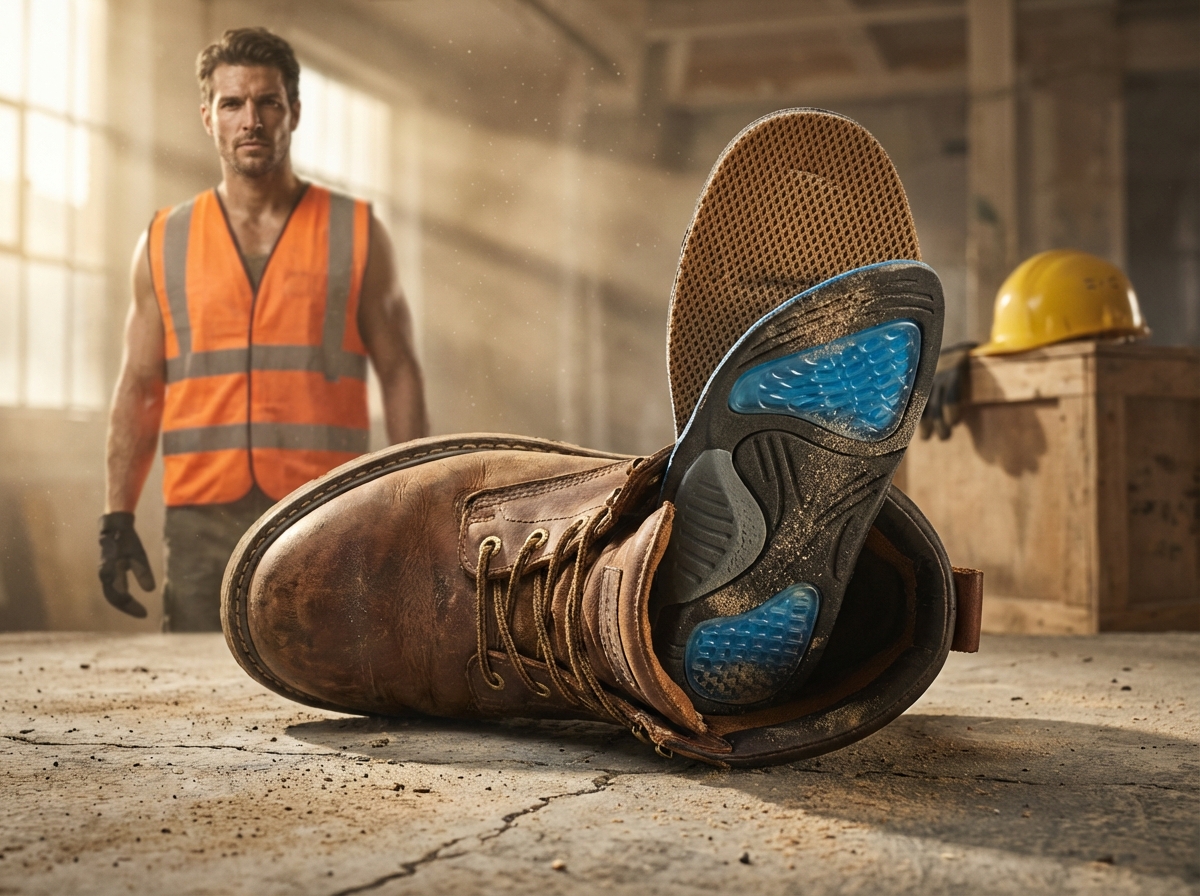
Standing on concrete all day takes a significant toll on the feet, knees, and spine. The right insole transforms work boots by adding necessary shock absorption, arch support, and pressure relief—reducing fatigue and injury risk. This guide reviews critical features, the best insole types, and top models for trade workers in the U.S., along with fit, care, and replacement tips to maximize comfort on hard surfaces.
Why specialized insoles matter for concrete work
Concrete is an unforgiving material that dominates modern industrial environments. Unlike dirt or grass, it lacks natural elasticity. When a worker stands on a concrete slab, the surface provides zero shock absorption. Every step generates a force that travels back into the body, known as ground reaction force. This physical interaction significantly impacts long-term health. On a softer surface, the ground deforms slightly to absorb energy. Concrete remains rigid, forcing the worker’s muscles and joints to act as the primary shock absorbers. Over a long shift, this leads to significant physical stress.
The Mechanics of Cumulative Microtrauma
Constant impact results in cumulative microtrauma—tiny injuries to soft tissues that occur thousands of times a day. Initially, a worker might only feel mild soreness. However, over months or years, these small stresses compound into chronic conditions. The feet are the first to suffer. Plantar fasciitis is a frequent complaint among tradespeople, involving inflammation of the fascia, the tissue connecting the heel to the toes. Without proper support, this tissue stretches excessively and develops micro-tears. Heel pain is another major issue; the natural fat pad under the heel bone is designed to protect the foot, but constant pressure against concrete causes this pad to thin out or shift, leaving the bone with minimal protection.
Common Physical Complaints in the Trades
Metatarsalgia, or pain in the ball of the foot, is also common. Often described as feeling like walking on pebbles, it occurs when body weight is concentrated on the forefoot rather than being distributed evenly. This pain moves up the kinetic chain. When feet are fatigued or misaligned, the body compensates, putting extra strain on the ankles and affecting knee alignment. Eventually, this leads to lower back fatigue. Many workers do not realize their back pain originates with their footwear. Using the best insoles for work boots is a primary method to address these issues at the source.
How Specialized Insoles Provide Protection
Specialized insoles are designed to correct these mechanical failures. Shock absorption is the most immediate benefit; high-quality materials dampen the force of each step, protecting joints from initial impact. Pressure redistribution is equally important. Standard boots often have flat interiors that create pressure points on the heel and ball of the foot. An orthotic insole fills the space under the arch, spreading weight across the entire foot and reducing the load on any single area.
Stability and Energy Return
Arch stabilization helps maintain a neutral foot position. Many individuals experience over-pronation, where the foot rolls inward. This rotation stresses the knee and leg. A quality insole prevents this movement. Heel cup alignment is another vital feature; a deep heel cup keeps the natural fat pad centered under the heel bone, maximizing the body’s own cushioning. Furthermore, modern insoles often utilize energy return technologies. These materials act like a spring, storing energy when the foot lands and releasing it as the foot lifts. This reduces muscular effort and provides foot fatigue relief during long shifts.
Occupational Safety and PPE Strategy
In the United States, ergonomic safety is a critical component of a modern PPE strategy. The Occupational Safety and Health Administration (OSHA) notes that musculoskeletal disorders are a leading cause of lost work time. Providing proper support is a proactive approach to health. Industry guidance from groups like the National Institute for Occupational Safety and Health (NIOSH) emphasizes the importance of floor mats and proper footwear. When mats are not feasible, the insole becomes the primary defense. Superfeet research indicates that dynamic insoles can reduce tibial shock, the vibration traveling up the shin bone.
Long Term Health Benefits
Research suggests that these interventions improve work boot comfort and reduce the risk of long-term injury. For those standing on concrete, the right insole is not merely an accessory; it is a piece of safety equipment. It helps maintain worker health, ensuring they can remain on the job without pain. Investing in quality support is a necessary step for anyone in the trades, combining shock absorption, alignment, and durable materials to withstand the weight of a worker for ten or twelve hours at a time.
Key features to look for when buying insoles for concrete floors
Selecting the best work boot insoles requires looking past the initial “squishy” feel of a product. Concrete does not flex, so you need materials that handle constant compression without collapsing. Polyurethane is a standard choice for heavy duty insoles because it resists “compression set” (flattening out) better than standard EVA foam. While EVA is lightweight and common in athletic shoes, it often loses its cushioning properties after a few weeks of heavy industrial use. For maximum shock absorption, specialized polymers like Sorbothane or PORON are superior. These materials dissipate energy across the footbed rather than letting impact travel up the legs. Gel inserts offer immediate comfort but can be heavy and sometimes lack the structural support needed for twelve-hour shifts. Cork is another option, providing a firm base that molds to your specific foot shape over time.
The density of these materials is often measured by Shore hardness, representing a trade-off between soft cushioning and durability. A very soft insole feels great for the first hour but compresses to nothing by the end of a shift, leaving feet pressing against the hard boot sole. Look for medium to high density for concrete work. This ensures anti-fatigue insoles provide a functional barrier throughout the day. High-density materials also help the insole maintain its shape for several months of daily wear.
Arch support is not universal; you must match the insole shape to your foot type. High arches need a tall profile to prevent the plantar fascia from overstretching, while flat feet require lower, gradual support to provide stability without bruising. Many insoles for standing come in low, medium, and high arch varieties. A deep heel cup is another vital element, cradling the fatty tissue under the heel bone to prevent it from spreading out under pressure.
Metatarsal pads and forefoot cushioning are helpful for workers who crouch or climb ladders. These pads sit behind the ball of the foot, spreading the metatarsal bones to reduce pressure on nerves. Energy return properties are also worth considering. Some modern materials act like a spring, reducing the muscle effort required to walk on hard surfaces. Studies show dynamic insoles can provide a measurable reduction in tibial shock compared to static versions. More details can be found in the guide on Work Boot Insoles That Fight Fatigue, Even on Concrete Floors.
Industrial environments demand extra protection. Look for moisture-wicking top covers to keep feet dry, preventing blisters and fungal growth. Antimicrobial treatments help control odors. Some high-end industrial insoles offer heat or oil resistance, which is critical in machine shops or refineries where chemicals might degrade standard foam.
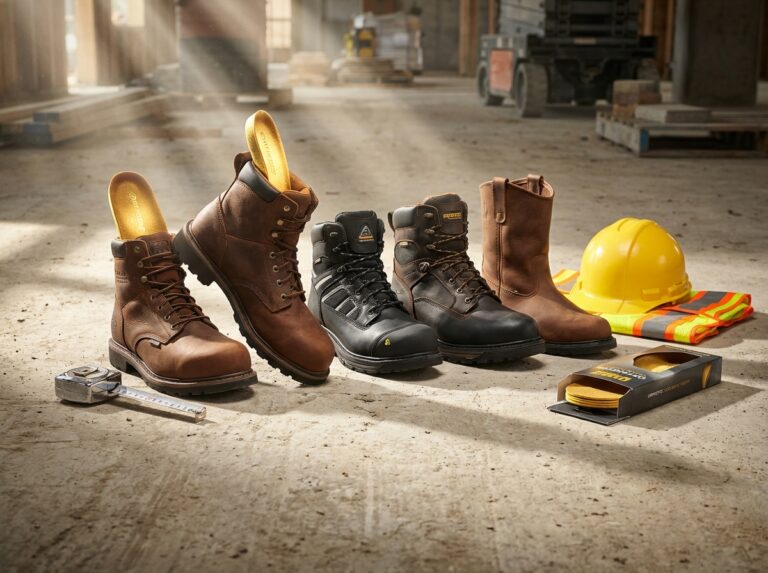
Most work boots come with a basic factory insert that is usually thin and offers minimal support. Always check if the original insole is removable before buying a replacement. Replacing the factory foam with a high-quality aftermarket option is the most effective way to improve comfort. Preformed insoles are ready to use, while heat-moldable versions can be warmed (usually in an oven, depending on the brand) to achieve a custom fit. For severe pain or structural issues, custom orthotics from a podiatrist may be necessary, though they are significantly more expensive.
Sizing can be complex as most heavy duty insoles are sold in ranges. You will likely need to trim them. Use the factory insole as a template: trace the outline onto the new insole and cut carefully. Consider the thickness of the insole relative to your boot’s internal volume. A thick, cushioned insole might make a steel toe boot feel tight. Pull-on boots often have less vertical room than lace-up styles. If you wear thick wool socks, you may need a thinner insole to maintain circulation. Always test the fit with your work socks and boots.
Types of insoles and recommended product categories
Types of Insoles and Recommended Product Categories
Choosing the right insert depends on your specific foot shape and job demands. Concrete floors are unforgiving, so matching the insole to your needs is the only way to avoid long-term injury. Here are the main categories for work boot insole reviews based on current market availability.
Heavy Shock Absorption
Sorbothane Performance Graphite
Built for workers who feel every step in their joints, these utilize Sorbothane, a visco-elastic polymer that mimics human flesh to absorb up to 94.7 percent of impact vibrations. They typically last about six months under heavy use. Prices generally range from $35 to $55. The main trade-off is weight; they are heavier than foam options, making them excellent for walking on industrial floors but potentially bulky in lightweight boots.
Arch Support and Pronation Control
PowerStep Pinnacle
If your feet roll inward or you have high arches, you need a semi-rigid support system. These use a polypropylene shell to keep the foot aligned, distributing weight across the entire foot. You can expect them to last roughly six months before the foam top layer compresses. They cost between $40 and $55. The trade-off is the break-in period; feet might feel sore for a few days as they adjust to the firm arch. Details are available at the PowerStep collection for standing all day.
Best Budget Options
Dr. Scholl’s Work Insoles
Widely available and affordable (usually under $20), these use a mix of gel and basic foam for immediate softness. The lifespan is shorter, often needing replacement every three to four months. The trade-off is a lack of structural support. They are great for adding cushioning to a new boot but won’t fix serious alignment issues. They serve as a good entry point for extra comfort without a large investment.
Wide or Narrow Boots
Spenco Total Support Max / Keen Utility K-20
Finding top insoles for extra-wide boots can be a struggle. Spenco offers a broader shape with a 3-POD system to balance the foot. Similarly, the Keen Utility K-20 is specifically designed to fit the wider toe boxes found in modern safety boots, ensuring the foot doesn’t slide or blister. These options typically last six to nine months and cost around $30 to $40. The trade-off is fit; they can be too wide for standard boots, causing edges to curl.
Long Shifts and Anti-Fatigue
Timberland PRO Anti-Fatigue Technology
Designed for standing in one spot for hours, these use an inverted cone design that compresses and rebounds to return energy, keeping foot muscles active. They usually last about nine months and cost roughly $30. The trade-off is thickness; they consume significant volume in the boot. If your boots are already tight, these might make them feel too small. Check out the Superfeet guide on anti-fatigue solutions for more context.
Foot Pain and Plantar Fasciitis
Superfeet Green or Work (Orange/Carbon)
Considered the gold standard for heel pain, these feature a deep, rigid heel cup that stabilizes the heel bone, reducing strain on the plantar fascia. Made of high-density closed-cell foam, they can last up to 12 months. The price is higher, often $55 or more. The trade-off is the high arch profile; the Green version might feel intrusive to those with flat feet. The Work versions offer slightly more forefoot cushioning but remain very firm. See expert tips at the Aetrex blog for work boots.
When to Choose Custom Orthotics
Medical Grade Solutions
If over-the-counter options fail to alleviate pain after a month, consult a podiatrist. Custom orthotics are molded to your foot from carbon fiber or hard plastic and can last several years. The price is the biggest hurdle, often $300 to $600. They are necessary for severe deformities or chronic injuries that standard insoles cannot address.
How to Evaluate and Where to Buy
When looking for the best insoles for standing on concrete, check the return policy. Brands like Superfeet or PowerStep often offer a 60 or 90-day comfort guarantee, which is vital since you cannot assess performance until completing a full shift. Major retailers like Amazon or Zappos have extensive reviews, but PPE specialty stores often have experts to measure arch height. Look for reviews from your specific trade—a warehouse worker has different needs than a heavy equipment mechanic. Pay attention to “volume” comments; high volume means the insole is thick and requires a roomy boot.
How to fit insoles and maintain them for maximum lifespan
Getting the right fit starts with removing the factory liners. Most work boots come with thin foam inserts offering little support. Use these old liners as a template: place the original insole on top of the new one, aligning the heels perfectly. Trace the toe shape with a pen and trim along the line with sharp scissors. It is better to leave a little extra material initially; you can always trim more. Slide the new insole into the boot, ensuring it lays flat without bunching, as folds cause friction and blisters.
Heat Molding and Adaptation
Certain orthotics allow for heat customization, helpful for unique arch shapes. Brands like SOLE are known for oven-moldable bases—always follow specific packaging instructions regarding temperature and timing. Typically, you heat them, place them in the boots, and stand still for two minutes to create a custom map of your foot. Other brands, like Superfeet, generally do not use oven heat but rely on high-density foam that adapts to your foot shape naturally through body heat and wear over time.
The Trial Period
Test the fit with the socks you wear on-site. Thick wool socks significantly alter toe box room. Walk around your home for an hour before a shift. A full day on concrete is the real test; your feet might feel different during the “break-in period” as muscles adjust to new alignment. However, sharp pain or numbness after three days suggests the arch height is incorrect. A lack of comfort after the first week usually indicates a need for a different level of support.
Cleaning and Maintenance
Concrete dust and sweat degrade materials. Do not put insoles in a washing machine or dryer; high heat ruins adhesives and foam structures. Wipe the surface with a damp cloth and mild soap. For deep cleaning, hand wash in cool water and air dry completely, away from direct heat or sunlight. Proper insole maintenance ensures cushioning remains effective.
Deodorizing and Rotation
Bacteria thrive in damp boots, leading to odors. Use a moisture-wicking spray or baking soda to manage smells. The best way to extend lifespan is rotation: buy two pairs of insoles and swap them daily. This allows the foam cells to fully recover their shape and moisture to evaporate, preventing premature breakdown of support layers.
Replacement Timelines
Heavy-duty use on hard surfaces wears out foam faster than casual walking. While premium rigid insoles may last 12 months, most tradespeople on concrete need replacements every six to nine months. Budget foam models may only last three to four months. Look for visible cracks in the plastic shell or permanent indentation in the foam. If back or knee pain returns, the support has likely failed. Replacing them early prevents injuries.
Safety and Boot Fit
Safety is a priority. Adding a thick insole can lift your foot, bringing toes too close to the steel or composite cap. Ensure you still have a thumb’s width of space. If the foot is pushed too high, the cap may not protect properly during impact. Also, check the heel lock; if the insole is too thick, your heel might slip, reducing ankle support. Verify the boot still meets ASTM safety standards with the new layer.
Frequently Asked Questions
Finding the right insoles involves more than picking a soft pair of pads. Concrete surfaces do not absorb energy, meaning your joints take the full force of every step. This section addresses common questions to help you make an informed choice.
Safety ratings and electrical hazards
Regarding Electrical Hazard (EH) ratings, most foam or gel insoles are non-conductive and do not interfere with the rating. However, you must avoid insoles with metal components or conductive threads unless specifically designed for static dissipation (SD) footwear. Always verify with your boot manufacturer if you work in high-voltage environments to ensure compliance.
Determining your arch type (The Wet Foot Test)
The wet foot test is the easiest way to find your arch shape at home. Wet your sole and step onto a piece of cardboard or a dark towel. A wide, full footprint indicates flat feet or low arches. A very thin line along the outer edge suggests high arches. A shape that is roughly half the width of your foot represents a neutral arch. Low arches need structural support to prevent over-pronation, while high arches require extra cushioning to absorb shock. Specific recommendations can be found in this Aetrex guide for concrete surfaces.
Managing plantar fasciitis on hard floors
Insoles can significantly reduce the stabbing pain of plantar fasciitis by supporting the fascia ligament. Look for a firm orthotic-grade insole rather than a very soft gel one. Firm support prevents the arch from collapsing and stretching the ligament too far. Consult a podiatrist if you feel sharp pain during your first steps in the morning or if pain persists after two weeks of using new supports. Many workers find relief with PowerStep orthotics.
Using multiple insoles at once
Never stack a new insole on top of the existing factory liner. This creates excessive bulk, pushes your heel too high (leading to slippage), and reduces the effective depth of the safety toe cap. Always remove the original foam insert before placing your new orthotic inside. If the boot still feels too roomy, consider thicker socks rather than a second insole.
The value of heat-moldable options
Heat-moldable insoles are worth the investment for people with unique foot shapes or different-sized feet. They provide a customized contact surface that standard off-the-shelf models cannot match, helping distribute weight evenly and reducing pressure points that lead to calluses. However, for standard foot shapes, a high-quality pre-molded insole is usually sufficient. Comparisons are available in the Stridewise expert review.
Manufacturer warranties and modifications
Most brands view insoles as a replaceable component. Swapping them usually does not void the warranty on the leather or outsole. However, specialized boots for chemical resistance or extreme heat might have specific requirements. Keep your original liners in a safe place; if you need to return the boots for a defect, reinstall the original parts. Check the paperwork in the box for warnings about aftermarket modifications.
Testing insoles before purchase
The best place to try insoles is a dedicated workwear store or specialized running shop with testers available. Bring the specific boots and socks you wear for your shift. Since feet swell throughout the day, try them on in the afternoon for an accurate fit. If shopping online, look for brands offering a comfort guarantee, allowing you to trim and wear them for a few shifts before committing.
Summary and Decision Guide
Concrete floors are among the most difficult surfaces for any tradesperson. Because they do not flex, your joints and muscles absorb the full force of every movement. Choosing the right insole is about protecting your body for the next decade, not just the next hour. Since most factory insoles are made of cheap foam that degrades quickly, upgrading to a high-quality aftermarket option is the best way to prevent long-term injury.
Quick Decision Rules for Daily Use
To simplify your choice, follow these general rules based on your foot type and work environment:
- For Heavy Duty Durability: If you stand for more than eight hours on concrete, choose an insole made of polyurethane or high-density foam. These materials resist compression better than standard EVA.
- For Flat Feet: Look for a low to medium arch height with a semi-rigid shell. High arches will likely cause pain by digging into your foot.
- For High Arches: You require a taller support profile to fill the gap under the foot and extra cushioning to assist with shock absorption.
- For Wide Feet: Avoid standard width insoles that leave gaps in the boot. Opt for wide-specific models like the Keen K-20 or Spenco Max to prevent blistering on the foot’s edge.
- For Heel Pain: Prioritize a deep heel cup and rigid structure over soft gel. You need stability to prevent the fascia from stretching.
Research confirms that dynamic insoles can significantly reduce tibial shock, preventing pain from traveling up to the knees and lower back. This is further explained in the Work Boot Insoles That Fight Fatigue article. Remember that insoles are consumable items, much like tires on a truck. Inspect them monthly for thinning in the heel or ball of the foot. Most workers on concrete should plan to replace their insoles every six to nine months to maintain peak protection. For more tips on matching insoles with specific boot brands, refer to the Choosing the Best Insoles for Work Boots guide.
Sources
- 8 Best Insoles for Work Boots on Concrete – Aetrex — Find the best insoles for work boots on concrete to ease foot pain, improve comfort, and support long shifts. Get expert tips for choosing …
- Work Boot Insoles That Fight Fatigue, Even on Concrete Floors — Studies show dynamic insoles in work boots can provide additional reductions in tibial shock compared to static versions, especially at faster …
- 11 Best Insoles For Work Boots Expert Reviewed – Stridewise — Best Gel Insoles for Work Boots: Dr Scholl's Work Insoles … If you're standing on cement or hard surfaces throughout the day, the inverted cone foam will help.
- Best Insoles for Standing All Day / Work Shoes – PowerStep — PowerStep orthotics are the best insoles for standing all day. Superior arch support and cushioning provide lasting comfort while moisture-wicking fabric keeps …
- Choosing the Best Insoles for Work Boots: All-in-One Guide — In this all-in-one guide, we'll explore various aspects of insoles, shedding light on how they can help with common foot issues such as flat feet, plantar …
- Best Concrete Work Boot Insole In 2025 – YouTube — Links to the Best Concrete Work Boot Insole we listed in today's Concrete Work Boot Insole Review video & Buying Guide: 1 Keen Utility K-20 …
Legal Disclaimers & Brand Notices
The content provided in this article is for informational purposes only and does not constitute professional medical advice, diagnosis, or treatment. Always seek the advice of a physician or other qualified health provider with any questions you may have regarding a medical condition, such as plantar fasciitis, metatarsalgia, or chronic musculoskeletal pain. Never disregard professional medical advice or delay in seeking it because of something you have read in this article.
All product names, logos, and brands are property of their respective owners. All company, product, and service names used in this article—including but not limited to Superfeet, PowerStep, Dr. Scholl’s, Sorbothane, PORON, Timberland PRO, and Keen Utility—are for identification purposes only. Use of these names, trademarks, and brands does not imply endorsement or affiliation.