Working in winter months demands PPE that keeps you warm without sacrificing safety or mobility. This 2025 guide examines why heated jackets matter for construction workers, the safety and durability features to prioritize, how to compare battery systems and models, and practical buying and maintenance tips so you get a jacket that performs on the jobsite.
Why heated jackets matter for construction workers
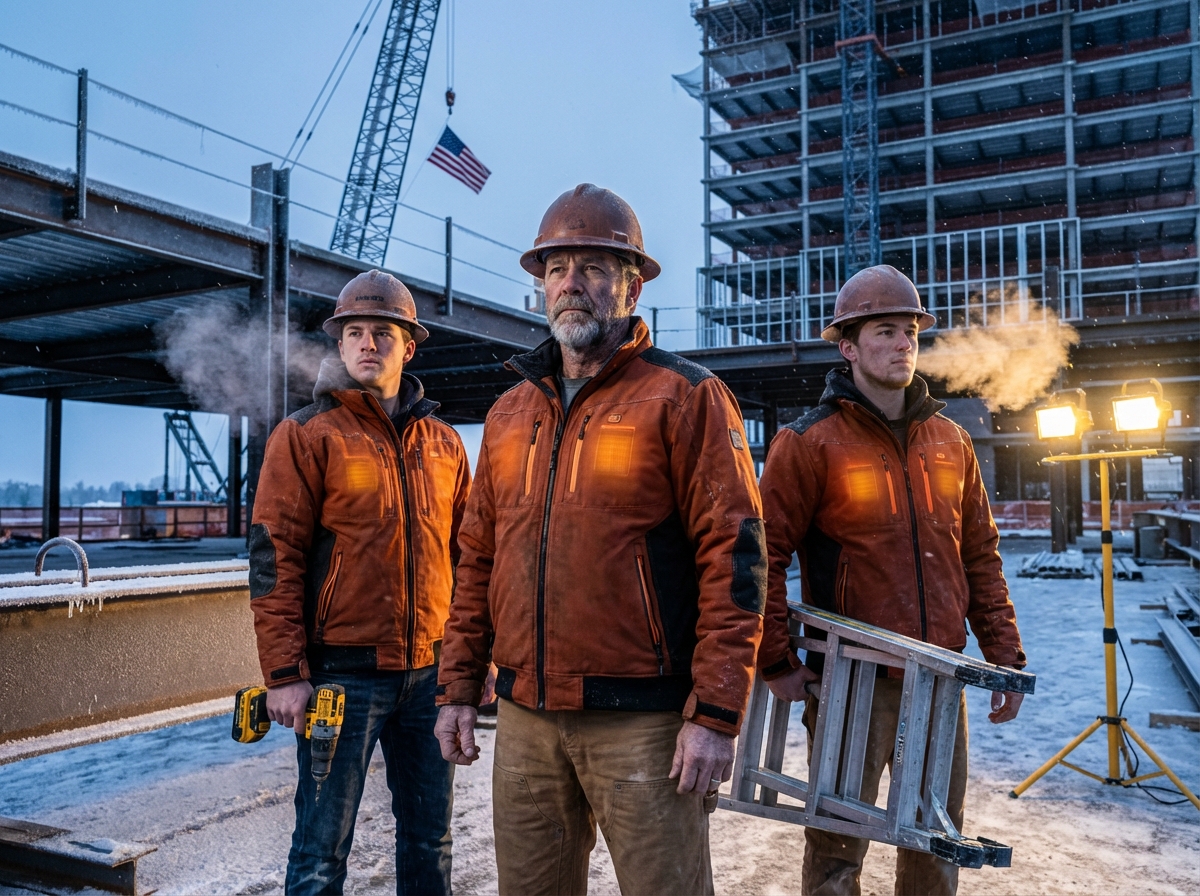
Working on a jobsite in the dead of winter is a test of physical endurance. It is not just about being uncomfortable; it is about how the body reacts to extreme environments. When temperatures drop below freezing, the human body prioritizes the core, pulling blood away from the extremities to keep vital organs functioning. For a construction worker, this physiological shift is a safety hazard. Numb fingers cannot grip a power tool properly, and shivering muscles lead to fatigue. A distracted mind, focused entirely on the biting wind, is a mind that misses a safety cue or a structural misalignment. This is why a heated jacket for construction has moved from a luxury item to a vital piece of winter PPE in 2025.
The primary benefit of heated workwear 2025 is the maintenance of fine motor skills. In trades like carpentry or electrical work, precision is everything. Trying to start a screw or wire a panel with frozen hands is nearly impossible. Traditional layering often fails here because it relies on trapped body heat. If you are standing still to perform a delicate task, your body is not generating enough heat to keep those layers effective. A heated work jacket provides an active heat source, keeping the blood flowing to the fingertips. This reduces the likelihood of tool-handling mistakes that lead to lacerations or dropped equipment.
Safety on a jobsite is tied to concentration. Cold stress is a documented risk factor that leads to workplace incidents. According to data from NIOSH and OSHA updated for the 2024-2025 winter season, workers exposed to cold environments show a significant decrease in cognitive function and situational awareness. When the core temperature drops even slightly, the brain slows down, leading to poor judgment. A worker might forget to clip into a harness or fail to notice a moving vehicle. By using active heating elements, these jackets help maintain a stable core temperature, allowing the worker to stay sharp and focused on the task rather than the weather.
The hazards on a modern jobsite are varied. Wind chill is perhaps the most aggressive; a 20-degree day can feel like zero degrees when the wind whips through an unfinished high-rise. Wet conditions add another layer of danger, as damp clothing pulls heat away from the body 25 times faster than dry clothing. Many workers find themselves in these conditions during early morning pours or overnight utility repairs. In these scenarios, a heated jacket is superior to heavy layering, which can become heavy and restrictive when wet. A high-quality heated jacket with a water-resistant shell, like those found in the ororo® workwear collection, provides warmth without the weight of multiple sweaters.
Different trades face unique challenges that these jackets solve. Concrete finishers often spend hours standing on cold, damp slabs where the cold radiates from the ground up. An insulated, heated jacket keeps their core warm while they wait for the right moment to finish the surface. Roofers, exposed to high winds with nowhere to hide, need construction cold safety gear that does not restrict their reach. A bulky parka makes it hard to move safely on a pitch, whereas a slim, heated softshell allows for a full range of motion while providing the warmth of a much heavier coat.
Utility workers often work in the worst possible conditions, restoring power in the middle of the night during storms. They need gear that can handle wind, rain, and freezing temperatures simultaneously. The ability to toggle heat settings is crucial here; they can turn the heat up during stationary repairs and lower it when moving equipment to prevent sweating. This versatility is something traditional wool or fleece cannot offer.
There are tradeoffs to consider. Battery management is the biggest hurdle. A dead battery in the middle of a shift means you are suddenly wearing a standard jacket that might not be heavy enough for the conditions. Workers must get into the habit of charging packs every night. There is also the issue of bulk. While the jackets themselves are often slimmer than traditional parkas, the battery pack adds weight to a specific pocket. This can feel lopsided or interfere with a tool belt if the pocket is poorly placed. Some workers also find that heating elements create hot spots if the jacket is too tight against the skin.
Productivity is a major driver for the adoption of this technology. A warm worker is a productive worker who takes fewer breaks to go to the warming hut or the truck. They move faster and with more confidence. For site managers, providing or allowing this gear is an investment in the project timeline, reducing the “winter slowdown” that many companies accept as a cost of doing business.
As we look at the broader picture of construction cold safety, it is clear that these garments are changing the industry. They bridge the gap between heavy, restrictive traditional gear and the need for high-performance mobility. However, choosing the right jacket involves more than just looking at the heat settings. It requires a deep understanding of how these electronic garments fit into the strict safety ecosystem of a professional jobsite.
Safety standards and PPE integration for jobsite use
Safety standards on a jobsite are the most important factor for any buyer. You cannot just wear any jacket when you are working around electricity or fire. Flame resistant (FR) options are a major factor for many trades. Most heated jackets use polyester shells, which melt when exposed to high heat. If your job involves welding or working near open flames, you need a jacket with specific certifications. NFPA 2112 is the standard for industrial flash fire protection, ensuring the garment will not contribute to burn injuries. ASTM D6413 is a test method for vertical flame resistance, measuring how long a fabric burns and if it continues to glow after the flame is gone. Some sites require these ratings by law. If you wear a non-rated jacket in these areas, you are at risk. Standard consumer jackets from brands like Fieldsheer are great for general use, but you must check the specific model for FR ratings if you work in high-risk zones.
High visibility compliance is another critical requirement. The ANSI ISEA 107 standard defines the requirements for safety apparel. Class 2 is for workers who need better visibility during the day or near traffic, while Class 3 is for high-risk environments with fast-moving vehicles. Gobi Heat makes jackets that include reflective striping for these jobsites. You should check the label to see if the jacket meets the current 2025 standards. A yellow or orange color is not enough on its own; the placement of the reflective tape must follow the rules for your specific work zone. If the jacket is covered by a harness or a tool belt, you might lose your compliance.
Electrical safety is a concern because these jackets use lithium-ion batteries. These batteries are generally safe but can be hazardous if damaged. A punctured battery can lead to thermal runaway—a fire that is very hard to extinguish. You should choose jackets with batteries that have short circuit protection, which stops the flow of electricity if the wires get pinched or wet. IP ratings are also important, indicating how well the electronics handle water and dust. An IPX4 rating means the jacket can handle splashes, while IP67 means it is fully waterproof. Construction sites are often wet and muddy, so you need a jacket that can handle a downpour without shorting out. Always follow the manufacturer warnings about washing; you must remove the battery and the controller before the jacket goes in the water.
Heated jackets must work with your other PPE. If you wear a fall arrest harness, the webbing can press against the heating zones. This compression can cause the elements to overheat against your skin or break the thin wires inside the fabric. You should perform a fit test with your harness over the jacket to look for snag points. The battery pack is often bulky and might get caught on equipment or tools. Ensure the battery pocket is in a spot that does not interfere with your tool belt. Hard hats are another factor; some jackets have large hoods that do not fit under a helmet. Look for a low-profile collar or a detachable hood. If you wear a respirator, make sure the jacket does not add too much bulk around your neck, which could break the seal of your mask.
Site managers have a responsibility when allowing heated gear. You should not just take a worker’s word for it. Request the Safety Data Sheet (SDS) for the batteries. This document explains the chemical hazards and how to handle an emergency. You should also verify the model certifications by checking the tags for ANSI or NFPA ratings. Consult with your site safety officer before approving any new gear. It is a good idea to have a list of approved models for your crew to ensure everyone is using safe and durable equipment. You can find more details on various models in the JTL Heated Clothes review.
There are several action items to follow before you buy. First, verify the model certifications rather than trusting the marketing text. Second, request the safety data sheets for the garment batteries, as this is standard procurement for jobsite electronics. Third, consult with your site safety officer regarding specific project rules. Finally, check the connectors for corrosion, as salt and moisture on a jobsite can ruin the ports.
Safety Compliance Checklist
Use these steps to ensure your heated workwear meets jobsite requirements.
- Verify that the jacket has the correct ANSI ISEA 107 class rating for your specific work zone.
- Check for NFPA 2112 or ASTM D6413 tags if your site requires flame resistant clothing.
- Request the Safety Data Sheet from the manufacturer to keep in the site safety file.
- Perform a fit test with a fall arrest harness to ensure no heating elements are compressed.
- Confirm the battery has short circuit protection and a minimum IPX4 water resistance rating.
Key features to evaluate before buying
Choosing a heated jacket for a jobsite requires a different mindset than buying one for a weekend hike. You need to look at the technical specs through the lens of daily abuse and long shifts. The heating system is the heart of the garment. Most modern jackets for 2025 feature between three and five heating zones, typically placed in the chest and upper back. Some premium models like the Venture Heat MAX include elements in the collar to keep your neck warm. You should check the total wattage of the system. A jacket with 26W of total heating power will reach higher temperatures faster than a standard 10W model. High-output systems can hit 130 or 140 degrees Fahrenheit on the highest setting, which is vital if you work in stationary roles like flagging or surveying.
Battery Systems and Tool Platform Compatibility
The battery is often the heaviest part of the gear. You have to decide between proprietary packs and tool-battery platforms. Proprietary batteries from brands like Ororo are usually slimmer and lighter, fitting into small pockets without getting in the way. However, many tradespeople prefer jackets that run on the same batteries as their power tools. The Milwaukee M12 and Craftsman V20 systems are popular because you likely already have spares in your truck. Using a tool battery means you can swap a dead pack for a fresh one from your drill without waiting for a recharge. The downside is the bulk; a 4.0Ah tool battery is much larger than a dedicated lithium-polymer pack and can feel heavy on your hip. Look for jackets with reinforced battery pockets that distribute this weight well.
Shell Materials and Jobsite Durability
Construction work destroys cheap fabrics. You need an outer shell that can handle snags on rebar or friction against concrete. Look for materials like Cordura or heavy-duty Oxford polyester, which offer high abrasion resistance. Check the seams and zippers; triple-needle stitching is a good sign of quality. Zippers should be heavy-duty, preferably from a known brand like YKK, and easy to pull while wearing thick work gloves. Reinforced panels on the elbows and shoulders are a major plus, as these areas take the most punishment when carrying materials or crawling in tight spaces. A durable work jacket should feel substantial but still allow you to move your arms freely.
Weatherproofing and Breathability
A heated jacket must keep the electronics dry. Check the IP rating of the battery compartment and the controller. An IPX4 rating means the jacket can handle splashes and light rain. If you work in wet coastal climates, you might need a waterproof membrane. For drier, colder areas, a Durable Water Repellent (DWR) coating on a softshell might be enough. Breathability is just as important; if the jacket traps sweat, you will get cold the moment the battery dies. Look for a Moisture Vapor Transmission Rate (MVTR) that allows sweat to escape during high-exertion tasks. Some hi-vis heated jackets combine weather resistance with reflective striping to meet safety standards while keeping you dry.
Ergonomics and Practical Design
The fit of the jacket affects how well the heat transfers to your body. It should be snug enough to keep the elements close to your skin but loose enough for layering. Pay attention to the hood and neck design. A roll-away or detachable hood is helpful if you need to wear a hard hat, and the collar should be low-profile so it does not interfere with helmet straps. Pocket placement is another big factor; you need accessible pockets for your phone and small tools that do not conflict with a tool belt or a safety harness. Some Fieldsheer models include specific utility loops for radios or pens. If you spend a lot of time kneeling or reaching overhead, look for gusseted underarms and articulated sleeves to prevent the jacket from riding up.
Warranty and Long-Term Value
Heated workwear is an investment. Budget options might cost around 120 dollars, while premium trade-specific jackets can exceed 350 dollars. Always check the warranty terms. Most brands offer a one-year or two-year warranty on the garment, but the battery might have a shorter coverage period. Check if the manufacturer sells replacement batteries or heating elements, as a jacket is useless if you cannot find a new battery three years from now. Repairability is a hidden value; some brands have authorized repair centers that can fix a broken wire or a faulty controller. Before you buy, verify the recharge time. A battery that takes six hours to charge might not be ready for a back-to-back shift unless you have a spare.
Top picks and how to compare models for 2025
Selecting a heated jacket for a jobsite in 2025 requires a specific framework. You should prioritize the battery ecosystem first. If your crew uses a specific tool brand, choosing a jacket that shares those batteries reduces downtime. Next, evaluate the shell material. Construction environments require abrasion resistance, so look for Oxford polyester or Cordura. Finally, check the safety ratings. High-visibility and flame-resistance are non-negotiable on many sites. Use the following categories to organize your shortlist.
Best Overall for Construction
Ororo Men’s Soft Shell Heated Jacket
This model remains a top choice for general contractors. It balances weight and warmth.
- Trade use. General contracting, carpentry, site management.
- Specs. 7.4V 5200 mAh battery, 10-hour runtime on low, 3 heating zones, water-resistant softshell, 2.1 lbs, sizes S to 3XL, price $150 to $170.
- Pros. The fit is professional. It heats up in under a minute.
- Cons. The battery shape is bulky in the pocket.
- Availability. Available at Ororo and major online retailers. One-year warranty included.
Milwaukee M12 ToughShell Heated Jacket
This is a staple for tradespeople already using the M12 battery platform.
- Trade use. Electrical, plumbing, heavy machinery operation.
- Specs. M12 RedLithium battery, 8-hour runtime, 3 zones plus pocket warmers, ToughShell stretch polyester, 2.5 lbs, sizes S to 4XL, price $180 to $220.
- Pros. The fabric is five times more durable than standard softshells. It is washer and dryer safe.
- Cons. It is heavier than proprietary battery models.
- Availability. Sold at Home Depot and tool distributors. One-year warranty.
Venture Heat Men’s MAX 26W
This jacket is designed for those working in sub-zero temperatures.
- Trade use. Concrete pouring, roofing, winter exterior work.
- Specs. 12V 5200 mAh battery, 9-hour runtime, 4 heating zones including the collar, 26W total power, 2.4 lbs, sizes S to 3XL, price $300 to $350.
- Pros. It reaches 130 degrees Fahrenheit quickly. The collar heat is excellent for wind protection.
- Cons. The price is higher than competitors.
- Availability. Available at specialty workwear stores. One-year warranty.
Best Heavy-Duty and Trades
Craftsman V20 Heated Jacket
This model uses standard power tool batteries for extreme durability.
- Trade use. Framing, demolition, masonry.
- Specs. V20 battery platform, 10-hour runtime on low, 4 heating zones, Cordura reinforced panels, 2.6 lbs, sizes M to 3XL, price $160 to $190.
- Pros. The Cordura fabric resists tears from tools. It uses the same battery as your drill.
- Cons. The battery adds significant weight to the hip.
- Availability. Available at Lowe’s and tool retailers. One-year warranty.
DeWalt DCHJ090 Soft Shell
A rugged option for those in the DeWalt 20V ecosystem.
- Trade use. HVAC, scaffolding, heavy equipment repair.
- Specs. 20V Max battery, 7-hour runtime, 3 heating zones, wind-resistant shell, 2.5 lbs, sizes S to 3XL, price $170 to $210.
- Pros. The USB power port on the battery adapter is useful. It handles wind very well.
- Cons. The runtime is shorter than 12V systems.
- Availability. Found at major tool outlets. One-year warranty.
DeWalt DCHJ060 Black Hooded Jacket
A casual but rugged option for DeWalt users who prefer a hoodie style.
- Trade use. Finish carpentry, shop work.
- Specs. 20V Max battery, 7-hour runtime, 3 zones, 2.4 lbs, price $160.
- Pros. The hood is comfortable and warm.
- Cons. Not as water-resistant as the softshell version.
- Availability. Tool retailers.
Milwaukee M12 Axis Layering Jacket
This is built to be worn under a heavy work coat or harness.
- Trade use. Ironworking, utility work.
- Specs. M12 battery, 8-hour runtime, 3 zones, Ripstop polyester, 1.8 lbs, sizes S to 3XL, price $150 to $180.
- Pros. It is thin enough for layering. The Ripstop fabric prevents small snags from spreading.
- Cons. It lacks the abrasion resistance of a standalone outer shell.
- Availability. Tool retailers and Dick’s Sporting Goods. One-year warranty.
Best Hi-Vis and Flame-Resistant
Fieldsheer Hi-Vis Heated Jacket
This meets safety standards for road work and high-traffic sites.
- Trade use. Traffic control, surveying, road construction.
- Specs. 7.4V 2200 mAh battery, 9-hour runtime, 3 zones, ANSI Class 3 compliant, 2.3 lbs, sizes M to 4XL, price $180 to $230.
- Pros. It is fully compliant with visibility laws. The Oxford polyester shell is very tough.
- Cons. The battery capacity is lower than some non-hi-vis models.
- Availability. Available at Fieldsheer. One-year warranty.
Gobi Heat Flash Hi-Vis Jacket
A high-heat option for workers who must be seen.
- Trade use. Flagging, airport ground crew, rail work.
- Specs. 7.4V 6500 mAh battery, 10-hour runtime, 3 zones, 140-degree max temp, 2.4 lbs, sizes S to 4XL, price $200 to $250.
- Pros. It is one of the warmest hi-vis jackets on the market. The reflective tape is high quality.
- Cons. It takes longer to charge than smaller batteries.
- Availability. Available at Gobi Heat. One-year warranty.
Milwaukee M12 Hi-Vis Heated Jacket
Combines tool battery convenience with Class 3 safety.
- Trade use. Municipal maintenance, utility repair.
- Specs. M12 battery, 8-hour runtime, 3 zones, water-resistant polyester, 2.5 lbs, sizes M to 3XL, price $190 to $230.
- Pros. It integrates perfectly with existing M12 chargers. The pockets are oversized for gloves.
- Cons. The bright fabric shows dirt quickly.
- Availability. Tool distributors. One-year warranty.
Best Budget Options
TideWe Heated Jacket
A reliable entry-level jacket for light construction.
- Trade use. Landscaping, light renovation.
- Specs. 10000 mAh power bank, 10-hour runtime, 3 zones, water-resistant polyester, 2.0 lbs, sizes S to 3XL, price $100 to $130.
- Pros. It uses a standard USB power bank. The price is very accessible.
- Cons. The fabric is thinner than premium workwear.
- Availability. Amazon and TideWe site.
ConqueCo Heated Vest
An affordable way to keep your core warm.
- Trade use. Indoor trades, warehouse work.
- Specs. 3.7V battery, 10-hour runtime, 3 zones, 1.2 lbs, price $90 to $110.
- Pros. It is very lightweight. It fits under any standard work coat.
- Cons. It does not provide arm warmth.
- Availability. Online marketplaces.
Regatta Voltera Heated Jacket
A simple insulated jacket for basic cold protection.
- Trade use. Site visits, light outdoor tasks.
- Specs. Battery sold separately or bundled, 6-hour runtime, 1 zone, 1.9 lbs, price $70 to $100.
- Pros. Very low price point.
- Cons. Only one heating zone.
- Availability. Outdoor retailers.
Best for Mobility and Lightweight Needs
Gobi Heat Ibex Workwear Vest
Designed for maximum arm movement.
- Trade use. Roofing, overhead electrical work.
- Specs. 7.4V 6500 mAh battery, 9-hour runtime, 3 zones, duck cotton and nylon, 1.5 lbs, sizes S to 4XL, price $160 to $200.
- Pros. The duck cotton is very durable. It allows for a full range of motion.
- Cons. It requires a separate shell for rain protection.
- Availability. Gobi Heat.
Fieldsheer Backcountry Xtera
A lightweight jacket for active workers.
- Trade use. Climbing, scaffolding, surveying.
- Specs. 7.4V battery, 9-hour runtime, 3 zones, lightweight stretch fabric, 1.8 lbs, sizes S to 3XL, price $180 to $210.
- Pros. It feels like a standard windbreaker. It does not restrict movement.
- Cons. Not suitable for heavy demolition.
- Availability. Fieldsheer.
Ororo Heated Vest
The most popular choice for layering.
- Trade use. All trades.
- Specs. 7.4V battery, 10-hour runtime, 4 zones including neck, 1.3 lbs, sizes S to 3XL, price $120 to $140.
- Pros. The neck heating element is a standout feature. It is very easy to pack.
- Cons. The fit can be snug.
- Availability. Ororo.
Comparison Table for 2025 Models
| Feature | Milwaukee M12 | Ororo Soft Shell | Venture Heat MAX | Fieldsheer Hi-Vis | TideWe Budget |
|---|---|---|---|---|---|
| Runtime (Low/Med/High) | 8/5/3 hrs | 10/6/3 hrs | 9/5/3 hrs | 9/5/3 hrs | 10/6/3 hrs |
| Recharge Time | 2 hrs | 4 hrs | 5 hrs | 4 hrs | 6 hrs |
| Platform Compatible | Yes (M12) | No | No | No | No (USB) |
| IP Rating | IPX4 | Verify | IPX4 | Verify | None |
| FR Certification | No | No | No | No | No |
| Visibility Features | Reflective trim | None | None | ANSI Class 3 | None |
| Durability | High (ToughShell) | Medium | High | High (Oxford) | Low |
Buying Scenarios for Construction
Cold Stationary Work
If your job involves standing for long periods, such as flagging or surveying, prioritize runtime and insulation. The Venture Heat MAX or Gobi Heat Flash are best here. These models offer higher wattage and larger batteries. They keep your core warm when your body is not generating its own heat. Look for jackets with neck heating to prevent heat loss from your collar.
High-Exertion Tasks
If you are framing, roofing, or moving materials, you will generate body heat. A heavy jacket will cause sweating, which leads to chills later. Choose a heated vest or a lightweight softshell like the Ororo Vest or Fieldsheer Backcountry. These allow you to turn the heat off during heavy work and back on during breaks. Mobility is the priority here. Ensure the jacket does not bunch up under a safety harness.
When you compare models for 2025, always check the street price. MSRP often drops during seasonal sales. Verify the warranty terms for the battery specifically. Many brands offer two years on the garment but only one year on the battery. This distinction is important for long-term costs on the jobsite. Using these best heated jackets for construction ensures you stay productive during the winter months. Recent heated jacket 2025 reviews show that durability is now as important as heat output. A construction heated jacket comparison should always lead you to a model that fits your specific trade needs.
Frequently Asked Questions
What is the difference between battery heated jackets and plug in systems
Battery systems use portable lithium-ion packs that allow you to move freely around a jobsite. Plug-in systems usually connect to a 12V vehicle outlet or a stationary power source. For construction work, battery-powered models are the standard because they do not tether you to a machine. You should check the voltage of the battery pack since higher voltage often means more heat but requires a specific charger. Most workers prefer 7.4V or 12V systems for a good balance of weight and warmth. You can see how these compare in the top 10 heated jackets reviewed of 2025.
Why might I choose a jacket compatible with my tool battery platform
Choosing a jacket that matches your power tools, like the Milwaukee M12 or Craftsman V20, simplifies your gear logistics. You can swap batteries from your drill or impact driver directly into your jacket, eliminating the need to carry different chargers and proprietary packs. It is a smart move for crews who already own several batteries from a specific brand. These platform batteries are often built to handle the rough conditions of a jobsite. You can find more details on these systems in the 12 best heated work jackets review.
Are heated jackets safe to wear with flammable materials
Standard heated jackets are not designed for environments with sparks or open flames. If your job involves welding or working near combustible gases, you must use a jacket with a flame-resistant rating like NFPA 2112. Most consumer models use synthetic shells that can melt. Always verify the FR certification on the garment tag before wearing it in high-risk zones. Consult your site safety officer to see if battery-powered apparel is permitted in your specific work area.
How long do batteries last in cold weather
Battery performance drops when temperatures fall below freezing. You might see a 10 to 30 percent reduction in runtime during a shift. Most manufacturers claim up to 10 hours on low settings, but real-world use on high heat usually lasts 2 to 4 hours. To maximize heated jacket battery life, keep your spare batteries in a warm pocket close to your body. Cold temperatures cause voltage sag, which can make the heat feel less intense. Check the manufacturer specifications for cold weather discharge curves if you work in subzero environments.
How do I wash and care for a heated jacket
Proper heated jacket maintenance starts with removing the battery and the controller. Most modern workwear is machine washable on a gentle cycle with cold water. You should never dry clean these garments because the chemicals can damage the internal wiring. Air drying is the safest method to prevent the heating elements from shifting or breaking. Always read the care label inside the jacket for specific manufacturer instructions. Avoid using bleach or fabric softeners as they can degrade the water-resistant coating on the shell.
Can heated jackets be worn under fall protection harnesses
You can wear them under a harness, but you must ensure the webbing does not compress the heating elements. Excessive pressure on the wires can cause hotspots or damage the system. It is best to wear the jacket as a mid-layer and perform a fit test with your harness to ensure full range of motion. Safety managers often recommend a vest for better mobility under safety gear. You can browse the ororo workwear collection for low-profile options.
Are heated jackets allowed on OSHA regulated sites
OSHA does not have a specific ban on heated clothing. However, the jacket must not compromise other safety requirements. If your site requires Class 2 or Class 3 high visibility gear, your heated jacket must meet ANSI/ISEA 107 standards. If you work in an area with electrical or fire hazards, the jacket must meet the relevant FR standards. Ask your safety manager to review the manufacturer safety data sheet for the battery. Many brands like Gobi Heat offer hi-vis models specifically for these environments.
How do I balance battery runtime and warmth during a full shift
The best strategy is to use the lowest heat setting that keeps you comfortable. Use the high setting only for short bursts when you first arrive on site or during breaks. Layering a windproof shell over your heated jacket helps trap the heat so the battery does not have to work as hard. Many workers carry at least one spare battery to ensure they have warmth through the final hours of a shift. Managing your settings effectively can extend your runtime by several hours.
What are common failure modes and repair options
The most frequent issues involve broken wires at the connection points or battery ports that become loose. If the jacket stops heating, check the cable inside the battery pocket for signs of wear. Some premium brands offer repair services or replacement heating modules. If the battery fails to hold a charge, it is usually time for a replacement. Do not attempt to solder the internal wiring yourself as this can create a fire hazard and voids the warranty. Regular inspection of the connectors can prevent sudden failures on the job.
Do heated jackets require special storage in winter
When you are using the jacket daily, keep it in a dry place away from direct moisture. If you are storing it for more than a few weeks, remove the battery. Lithium batteries should be stored at roughly 50 percent charge to maintain their health. Storing a battery completely flat or fully charged for months can reduce its total capacity. Keep the gear in a climate-controlled environment rather than a cold truck or an unheated shed. This simple step can significantly extend the life of your power cells.
What is the expected lifespan and how to extend it
A high-quality heated jacket should last 3 to 5 years, while the battery typically lasts 300 to 500 charge cycles. You can extend the life of the garment by minimizing the number of times you wash it. Spot cleaning the outer shell is often enough for daily dirt. Avoid folding the jacket tightly in a way that creases the heating panels. Treat the battery connectors with care and keep them free of dust and debris from the jobsite. You can find durable options in the 9 best heated jackets for men in 2025 guide.
Final thoughts and practical buying checklist
Selecting the right heated workwear in 2025 comes down to balancing raw power with jobsite compliance. You want a jacket that keeps your core warm without making you less safe. The market has moved toward specialized gear, with more options for hi-vis and flame-resistant needs. Brands like Ororo and Gobi Heat have refined their designs for the trades. The main takeaway is that a jacket is a tool; it needs to be as reliable as your drill and as tough as your boots.
To make the best choice, follow a logical process. Start by assessing your site risks and talking to your safety officer about PPE requirements. Set a realistic budget—good workwear usually costs between one hundred and three hundred dollars. Shortlist jackets based on your specific trade and verify all certifications, rather than taking marketing claims at face value. Test the fit while wearing your usual base layers and check battery interchangeability to see if the jacket can use batteries you already own. Finally, review the return policy and register the product immediately to ensure you get safety updates and warranty support.
Practical Buying Checklist
Use this list before you spend your money.
- Confirm the jacket meets site visibility requirements.
- Check for flame resistant tags if you weld or grind.
- Inspect the outer shell for abrasion resistance.
- Verify the battery lasts at least eight hours on medium.
- Ensure the battery pocket does not interfere with your tool belt.
- Test the range of motion in your shoulders and arms.
- Check if the hood fits over your hard hat.
- Confirm the electronics have an IPX4 rating or higher for rain.
- Verify the warranty covers both the garment and the heating zones.
Maintenance is the key to making your investment last. Proper storage is the most important part. When the winter ends, do not just throw the jacket in a box. Clean it according to the manufacturer instructions. Most heated work jackets require you to remove the battery before washing. Use a gentle cycle. Always air dry the garment. High heat in a dryer can damage the internal wiring. For the batteries, follow the 40 to 60 percent rule. Do not store them completely empty. Do not store them completely full. Keep them in a cool and dry place. Avoid leaving batteries in your truck overnight during a deep freeze. Extreme cold can permanently reduce their capacity.
You must balance warmth with situational awareness. It is easy to get too comfortable and lose focus. If you are too warm, you might start to sweat. This leads to a chill once the battery dies. Use the lowest heat setting that keeps you comfortable. This preserves the battery. It also prevents overheating. Always make sure your jacket does not muffle the sound of heavy machinery or backup alarms. Stay warm but stay sharp. Your safety depends on your ability to sense the environment around you. A good hi-vis heated jacket should help you do your job. It should never get in the way of it.
References
- Top 10 Heated Jackets Reviewed of 2025 – BOWINS Garment — The Ororo Men's Soft Shell Heated Jacket claims our top spot as the best overall heated jacket of 2025, blending long battery life, effective …
- Heated Jackets for Construction Workers | DICK'S Sporting Goods — Stay warm and focused on the job with our heated jackets designed specifically for construction workers. These jackets feature advanced heating technology …
- The 12 Best Heated Work Jackets Review — The 12 best heated work jackets of 2025—from JTL's customizable vest to Venture Heat's extreme powerhouse—span budgets and rigors …
- The 9 Best Heated Jackets for Men in 2025 – Fieldsheer — The 9 Best Heated Jackets for Men in 2025 · 1. Backcountry Xtera Heated Jacket · 2. Guardian LX Heated Jacket · 3. Heated Flannel Jacket · 4. Trek …
- Extreme Cold Weather Work Gear | Gobi Heat — The flash heated hi-vis mens heated jacket was built for the construction worker enduring less than favorable temperatures to get the job done.
- Best Heated Vests of 2025, Expert Tested – Field & Stream — We tested the best heated vests for men and women for staying warm all fall and winter, whether you're working or hunting.
- Heated Workwear Collection | Durable & Flexible | ororo® — Heated Jackets & Vests to Keep You Focused on Your Job Even on the Coldest Days. Water-Resistant & Durable Materials. 3 Adjustable Heating Settings.
EMPTY