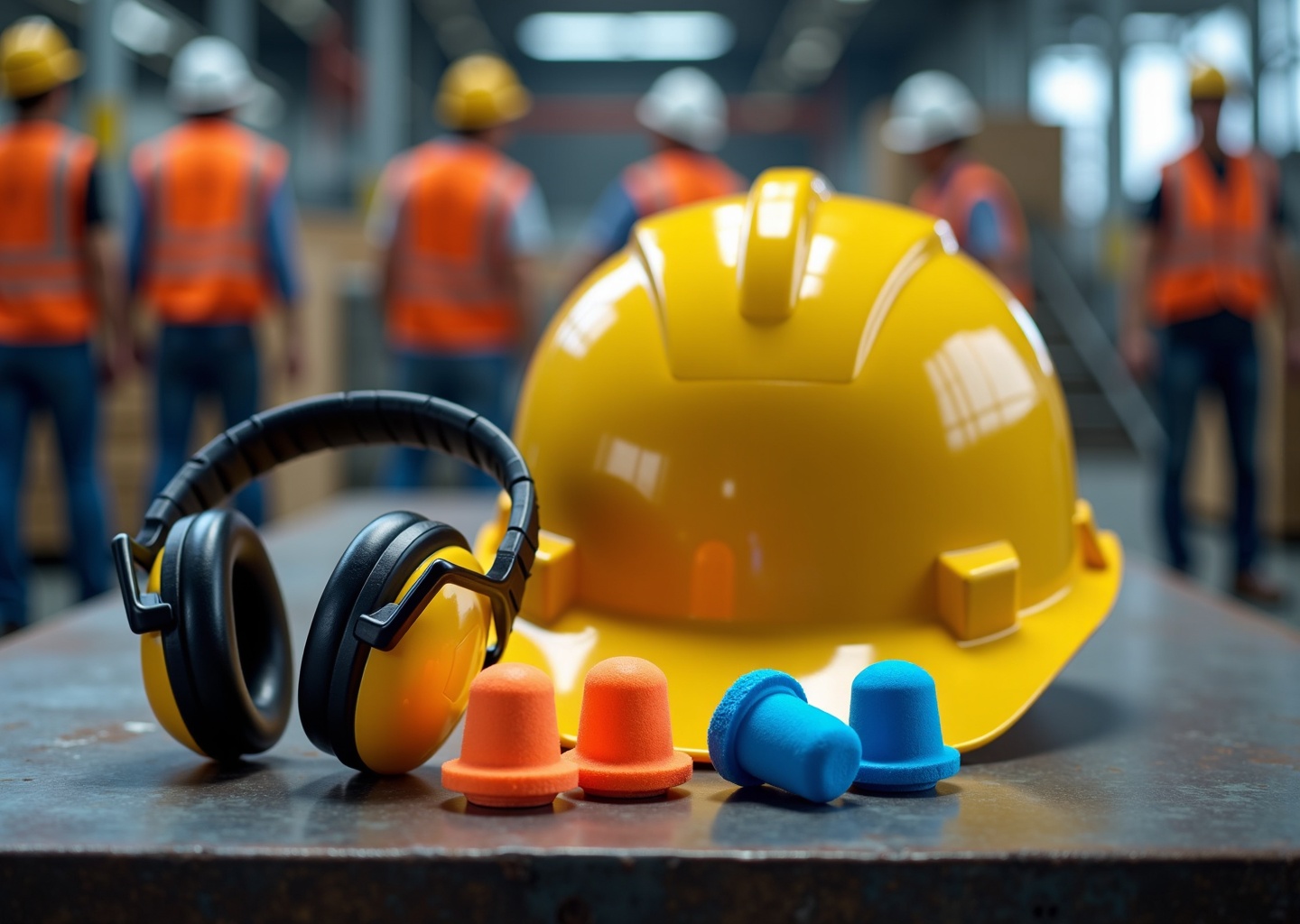
Choosing between earplugs and earmuffs is a common PPE decision for workers exposed to hazardous noise. This article compares their real-world protection, comfort, compatibility with other safety gear, and regulatory context, then offers actionable selection and maintenance advice so you can pick the best solution for construction, manufacturing, shooting ranges, and other noisy workplaces.
Why Hearing Protection Matters and the Basics of How They Work
When you’re standing in the PPE aisle or browsing online, the choice seems simple enough. You have earplugs that go in your ears and earmuffs that go over them. The core question for any safety manager or worker is straightforward: which one actually protects my hearing better? The honest answer is, it’s not about one being universally superior. The best hearing protection is a matchup between the device, the specific noise you’re facing, and you, the wearer.
Let’s start with the noise itself. Sound isn’t just about volume; it’s also about frequency, or pitch. This is where the first major difference between plugs and muffs appears. Earmuffs generally provide more consistent and effective protection against mid to high-frequency noises. Think of the high-pitched whine of a circular saw or a grinder. The solid cups and foam cushions of an earmuff create a physical barrier that is very good at blocking these shorter soundwaves. In contrast, some studies suggest that properly fitted earplugs can have an edge in very low-frequency environments, like the deep, resonant hum of a large engine or generator. Research published in the National Center for Biotechnology Information has explored how earplugs can be more effective than earmuffs against certain low-frequency noises, specifically below 100 Hz. This is partly because they seal the ear canal directly, which can help reduce the bone-conducted sound that travels through your skull.
However, the theoretical protection of any device means very little if it isn’t worn correctly. This brings us to the most critical factor in hearing protection: the fit. This is where the debate gets personal. Earplugs, when inserted properly, create a near-perfect seal inside the ear canal. This intimate contact is why they can offer such high levels of protection. The problem is, “inserted properly” is a big variable. For foam earplugs, you must roll them down tightly, pull your outer ear up and back to straighten the canal, insert the plug deeply, and then hold it in place while it expands. If you skip any of these steps, you create tiny gaps that let sound leak in, drastically reducing your protection. Field studies have shown that poorly fitted pre-molded earplugs can sometimes offer as little as 1 decibel of real-world protection, which is virtually nothing.
Earmuffs, on the other hand, seem more foolproof. You just put them on your head, and you’re done, right? Not exactly. While their performance is generally more consistent among users because there’s less technique involved, the quality of their seal is fragile. The cushions must press flat and evenly against the skin all the way around the ear. Anything that breaks that seal will compromise your protection. The arms of safety glasses are a classic culprit, creating a channel for sound to enter. A thick beard, long hair, or even a cap worn underneath can also prevent a proper seal. The tension of the headband is also crucial; if it’s too loose, the seal is weak, but if it’s too tight, it becomes uncomfortable for long-term wear.
This leads directly to comfort and practicality. An uncomfortable protector is one that gets taken off, even for a few minutes, and those few minutes of exposure can cause permanent damage. Earplugs are lightweight, don’t trap heat, and are easy to carry in a pocket. They are ideal for hot, humid environments or for jobs in confined spaces. Earmuffs can feel heavy and bulky, and they can get uncomfortably warm, especially during a long summer shift. Their main advantage in convenience is for intermittent noise. It’s much faster to pull a pair of earmuffs off and on than it is to properly remove and re-insert earplugs.
You also have to consider compatibility with other essential PPE. This is an area where earplugs have a clear advantage. They don’t interfere with hard hats, safety glasses, face shields, or respirators. Earmuffs can be problematic, often requiring special hard hat-mounted versions to be worn correctly with head protection. As mentioned, they also conflict with the very safety glasses you might be required to wear.
For extremely loud environments, typically those exceeding 100-105 dBA, you shouldn’t be choosing between earplugs and earmuffs. You should be using both. Wearing a properly fitted earplug inside a fully sealed earmuff is known as dual hearing protection. This combination doesn’t double the protection rating, but it does increase the overall noise reduction. To estimate the combined protection, you add 5 decibels to the Noise Reduction Rating (NRR) of the more protective of the two devices. This is the standard practice for workers in the loudest environments, like on an airport tarmac or using a pneumatic riveter.
Technical Comparison Attenuation Standards Fit and Real World Performance
When you pick up a package of earplugs or earmuffs, the most prominent number you’ll see is the Noise Reduction Rating, or NRR. This number, measured in decibels (dB), represents the maximum potential sound reduction the device can provide in a controlled laboratory environment. The testing follows strict protocols, such as those outlined in the ISO 4869 series, where trained technicians fit the protectors perfectly on test subjects to measure sound attenuation across different frequencies. This gives us a standardized, best-case-scenario rating. However, the number on the box is not the protection you get on the job site.
The single biggest disconnect in hearing protection is the gap between the laboratory NRR and the actual, real-world attenuation a worker achieves. Field studies consistently show that users get far less protection than the NRR suggests, sometimes less than half. One international review of studies found that the protection achieved by 84% of the workforce for some pre-molded earplugs was as low as 1 dB. This happens because perfect fit is difficult to achieve and maintain outside of a lab. Factors like improper insertion, incorrect size, or wear and tear degrade performance significantly. Because of this discrepancy, safety professionals recommend “derating” the NRR to get a more realistic estimate of protection. The key takeaway is that the NRR is a starting point for comparison, not a guarantee of performance.
For earplugs, the effectiveness hinges entirely on a deep and complete seal within the ear canal.
- Foam Earplugs
These require the user to roll them into a tight, crease-free cylinder and insert them deeply, holding them in place while the foam expands to fill the canal. A shallow insertion provides almost no protection. - Pre-molded Earplugs
These reusable plugs don’t require rolling but must be the correct size for the user’s ear canal. If the flanges are too small, they won’t seal; if too large, they won’t insert properly and will be uncomfortable. - Custom-molded Earplugs
These are created from an impression of the user’s ear, offering a more reliable and comfortable fit, though they represent a higher initial investment.
Corded plugs can help prevent loss but can also snag on machinery, while uncorded plugs are less obtrusive. The choice depends on the specific job environment.
Earmuffs seem simpler, but their performance also depends on a perfect seal. The soft cushions must press firmly and evenly against the head around the entire ear. Any gap breaks the seal and lets noise leak in.
- Headband Tension
Over time, headbands can lose their tension, resulting in a loose fit and a poor seal. - Interference
The arms of safety glasses are a common culprit, creating channels that allow sound to bypass the cushion. Thick hair, facial hair, or wearing a hard hat that pushes the cups out of position can also compromise the seal, often reducing protection by 5 to 10 dB.
Regular inspection of the cushions for cracks or stiffness is essential, as they typically need replacement every six months with heavy use.
Advanced electronic hearing protectors address some of the practical limitations of passive devices. They are not just about blocking noise; they are about managing sound.
- Electronic Noise-Cancelling Earmuffs
These use microphones and circuitry to create an anti-noise wave that cancels out low-frequency, continuous sounds like engine hums or HVAC noise. They are particularly effective for improving comfort in these environments. - Level-Dependent Protectors
Also known as “sound restoration” or “talk-through” earmuffs, these devices use external microphones to pass safe-level ambient sounds and voices through to the user’s ear. When a loud noise occurs, the electronics instantly shut off or compress the sound to a safe level. This technology is invaluable for maintaining situational awareness and communication without removing protection. - Amplified Communication Headsets
These integrate level-dependent technology with two-way radio communication, allowing for clear conversation in high-noise areas. They are essential for team coordination in industries like aviation and manufacturing.
These technologies improve outcomes by solving the common complaint that hearing protection makes it impossible to hear important sounds. However, overprotection can be just as hazardous as no protection if it isolates a worker from their surroundings. To maintain situational awareness, it is critical to match the protector to the environment. Do not use a 33 NRR earplug when a 25 NRR earmuff will suffice. Electronic level-dependent protectors are an excellent solution, as they allow workers to hear ambient sounds clearly while protecting them from harmful noise. Their primary limitation is battery life, so it’s important to start each shift with fresh batteries.
Ultimately, you can’t manage what you don’t measure. This is where fit-testing comes in. Hearing protection fit-testing is a process that verifies the amount of protection an individual worker is receiving from their specific hearing protector as they wear it. Systems based on standards like ANSI/ASA S12.6 use methods like Real-Ear Attenuation at Threshold (REAT), which measures the user’s hearing threshold with and without the protector, or Microphone-In-Real-Ear (MIRE), which uses a tiny microphone to measure sound levels inside the ear canal. Fit-testing transforms hearing protection from an assumption into a known quantity. It identifies workers with poor fit, provides a chance for one-on-one training, and documents that the provided protection is adequate. Without regular training and fit verification, even the highest-rated PPE can fail to protect.
Practical Selection Guide Choosing by Job Task Comfort Hygiene and Compatibility
Choosing the right hearing protection goes far beyond picking the highest Noise Reduction Rating (NRR) off the shelf. The best device is the one that gets worn correctly and consistently, every single time it’s needed. This means the choice depends entirely on your specific job, the environment, and your personal needs for comfort and communication.
Making the Right Choice for Your Job
Different jobs present unique challenges. What works on a factory floor might be impractical on a construction site.
Construction and Carpentry
Workers often face intermittent, high-impact noise from tools like jackhammers and nail guns. They also almost always wear hard hats. In this case, cap-mounted earmuffs are an excellent choice. They integrate directly with the hard hat, making them easy to flip down when needed and up when communicating. For tasks in tight spaces or with a lot of head movement, comfortable foam earplugs might be better.
Manufacturing and Assembly Lines
These environments are frequently hot, humid, and involve steady, continuous noise from machinery. Earmuffs can become sweaty and uncomfortable during a long shift. Disposable foam earplugs are often the preferred solution. They are lightweight, don’t trap heat, and provide consistent protection when inserted properly. Corded versions are useful to prevent them from getting lost or falling into machinery.
Aviation and Ground Crews
Jet engine noise is not only extremely loud but also dominated by low-frequency sounds, which are notoriously difficult to block. High-attenuation earmuffs are essential here, as they generally perform better than earplugs against low-frequency noise. Many ground crews use specialized communication headsets that combine robust protection with the ability to speak clearly with pilots and other personnel.
Shooting Ranges
Firearms produce dangerously high impulse noise. While any protection is better than none, specialized hearing protection is ideal. Because they are seated inside the ear canal, earplugs can provide a more reliable seal against the rapid pressure change of an impulse sound, as earmuffs can sometimes momentarily lift from the head during the shockwave. Electronic earmuffs are also very popular because they can amplify quiet sounds like conversations and range commands while instantly shutting down to block the loud gunshot noise. For maximum protection, especially indoors, many shooters use dual protection.
Oil and Gas Industry
Noise levels on rigs and at processing plants can exceed 110 dBA, making this one of the most hazardous environments for hearing. A single layer of protection is often not enough. Dual protection, wearing well-fitted earplugs underneath a pair of high-attenuation earmuffs, is standard practice.
Outdoor Work (Landscaping, HVAC)
Noise exposure is typically intermittent. Portability and convenience are key. Banded or corded pre-molded earplugs are a great option. They can be worn around the neck and quickly inserted when a noisy tool like a leaf blower or generator is running.
Hygiene, Maintenance, and Storage
Proper care ensures your hearing protection works effectively, extends its life, and doesn’t cause ear infections.
- Disposable Foam Plugs: These are single-use only. Rolling them with dirty hands can introduce bacteria into the ear canal. Use a fresh pair every day, or more often if they become soiled.
- Reusable Plugs: These should be cleaned regularly with mild soap and water and allowed to air dry completely. With proper care, they can last for weeks, but should be replaced immediately if they become stiff, torn, or deformed.
- Earmuffs: Wipe the cushions with a damp cloth daily. The soft foam cushions and inserts are critical for a good seal and should be replaced every 6 to 12 months, or sooner if they appear cracked, stiff, or damaged.
- Storage: Always store hearing protection in a clean, dry case. This keeps reusable plugs and earmuff cushions from being deformed or contaminated with dirt and debris.
Compatibility with Other Personal Protective Equipment (PPE)
Hearing protection often has to work with other safety gear.
Hard Hats, Glasses, and Respirators
The arms of safety glasses can break the seal of an earmuff, reducing its effectiveness by 5 to 10 decibels. If you wear glasses, take extra care to ensure the muff seals around them, or opt for earplugs. Similarly, respirator straps can interfere with an earmuff seal. In these situations, earplugs are often the more reliable choice. For hard hat users, cap-mounted earmuffs are designed to avoid this conflict.
Calculating Your Needs and Handling Extreme Noise
You don’t need to guess how much protection you need. First, your workplace noise level should be measured, giving you an 8-hour Time-Weighted Average (TWA). Your goal is to use a hearing protector that brings your exposure below OSHA’s action level of 85 dBA.
As the previous chapter explained, the lab-tested NRR isn’t what you get in the real world. A conservative way to estimate protection is to use a derating formula. One common method is to subtract 7 from the NRR, then divide the result by 2.
Protected Exposure = TWA Noise Level – ((NRR – 7) / 2)
If your TWA is 102 dBA and you use a protector with an NRR of 33, your estimated exposure is 102 – ((33 – 7) / 2) = 89 dBA. This is still above the 85 dBA action level, indicating more protection is needed.
When noise levels are so high that no single device can lower your exposure to a safe level, you have two options. The best approach is always to reduce the noise at its source through engineering controls. If that’s not possible, the next step is dual protection. Wearing earplugs under earmuffs provides more protection than either device alone. However, you cannot simply add the two NRR values together. To calculate the combined NRR, add 5 dB to the NRR of the device with the higher rating. This provides a critical buffer in extremely loud environments, but it’s not a substitute for controlling hazardous noise at its source.
Conclusions and Recommended Next Steps for Buyers and Safety Pros
After exploring the specifics of earplugs and earmuffs, the main takeaway is clear; there is no single “best” hearing protector. The most effective choice is always the one that is right for the specific noise environment, the task at hand, and the individual worker. Earplugs might offer superior protection in some scenarios due to their direct seal in the ear canal, while earmuffs provide consistency and are easier to use correctly. The goal of a hearing conservation program isn’t to pick a winner between the two, but to build a versatile toolkit that addresses the unique hazards across your workplace. Success hinges on matching the right Personal Protective Equipment (PPE) to the right situation and ensuring it’s used properly every single time.
With that in mind, your purchasing and implementation strategy should be guided by a few core principles. First, always match the protector type to the job’s demands. A worker in a hot, humid manufacturing plant will likely find earplugs more comfortable and practical than bulky earmuffs. Conversely, a worker who needs to frequently remove and reapply protection might be better served by earmuffs. Second, you must prioritize fit-testing and comprehensive training. The Noise Reduction Rating (NRR) printed on the package is an ideal laboratory figure. Real-world attenuation depends entirely on achieving a perfect fit, which is why individual fit-testing is essential. Training should cover not just how to wear the device, but why it’s important and how to care for it.
Third, for environments where communication and situational awareness are critical for safety, seriously consider investing in electronic or level-dependent hearing protectors. These devices use technology to block harmful loud noises while allowing normal conversation and important environmental sounds, like alarms or approaching vehicles, to be heard clearly. This feature directly counters one of the most common reasons workers remove their hearing protection. Finally, for extreme noise environments, typically those at or above 100 dBA, or those with high-level impulsive sounds, double protection is the standard. Wearing earplugs underneath earmuffs provides an additional layer of protection that can be critical for preventing hearing damage in the most hazardous jobs. As a rule, this combination increases the effective NRR by 5 dB over the higher-rated device.
To put these principles into practice, here is a straightforward action checklist for safety managers and PPE buyers.
- Measure Your Noise Environment
Conduct a thorough noise survey to identify Time-Weighted Average (TWA) exposures for all affected employees. You can’t protect against a hazard you haven’t measured. - Compare Adjusted Attenuation
Use the NRR as a starting point, but always derate it to estimate real-world protection. Select protectors that bring worker exposure well below the OSHA Permissible Exposure Limit (PEL) of 90 dBA and closer to the NIOSH Recommended Exposure Limit (REL) of 85 dBA. - Conduct Individual Fit-Tests
Implement a fit-testing program for all employees required to wear hearing protection. This verifies that each worker is getting the expected level of protection from their specific device and knows how to wear it correctly. - Train Your Workers Effectively
Go beyond a simple handout. Provide hands-on training that covers proper insertion and fit, cleaning and maintenance, and the permanent consequences of noise-induced hearing loss. Reinforce this training regularly. - Schedule Maintenance and Replacement
Hearing protection wears out. Disposable earplugs should be replaced daily. Reusable plugs and earmuff cushions have a limited lifespan and must be replaced according to manufacturer guidelines, typically every few months, to maintain an effective acoustic seal.
Ultimately, a successful hearing conservation program is a balancing act. It requires finding the intersection of effective protection, user comfort, and consistent compliance. A protector with a high NRR is useless if it’s too uncomfortable to wear for an entire shift. The best strategy involves offering a variety of suitable options and empowering workers with the knowledge to use them correctly. As you move forward, the next step is to research specific models, read user reviews, and compare product ratings to find the protectors that best fit the needs you’ve identified in your workplace.
Sources
- The Efficiency of Hearing Protective Devices against Occupational … — The aim of this study was to determine the efficiency of two samples of earmuff and earplug in low frequency noise reduction in comparison to subjective method.
- Ear Plugs Vs. Ear Muffs: Which Are Better? | e3 Diagnostics — Earplugs are inserted directly into the ear canal, giving them a significant advantage in noise reduction. This closer fit typically provides better protection.
- U.S. Hearing Protection Devices Market By Product (Earplugs … — Furthermore, 13% of those tested for noise exposure show hearing impairment in both ears. This significant prevalence of hearing-related issues underscores the …
- Earmuffs or earplugs? Ultimate hearing protection for everyone | uvex — According to a study carried out by the Robert Koch Institute (RKI), five percent of all respondents suffered from minor hearing difficulties.
- Are Disposable Earplugs Effective? – Anadyne — Graph of effectiveness of disposable earplugs vs earmuffs vs reusable earplugs … and hearing protection manufacturers. 3M scientist Eliot Berger …
- [PDF] Hearing Protection in the 21st Century – CDC Stacks — Simply setting out boxes of earplugs, passing out earmuffs, and showing a canned video does nor constitute an adequate HPD training program. Given what health …
- [PDF] Scientific Basis of Noise-Induced Hearing Loss — Measured in terms of the overall protection achieved by 84% of the workforce, earplug attenuation varies from a low of 1 dB for one type of premolded earplug to …
Legal Disclaimers & Brand Notices
This content is provided for informational purposes only and is not intended to be a substitute for professional medical advice, diagnosis, or treatment. Always seek the advice of a qualified healthcare provider or certified occupational safety specialist with any questions you may have regarding a medical condition, hearing protection requirements, or workplace safety compliance.
All product names, logos, and brands mentioned in this article are the property of their respective owners.
“`